This volume is about looking. Song painting is not designed to be seen all at once — the great works are handscrolls, unrolled an arm’s length at a time, and the small ones reward standing very close. Here is what to look at, and in what order.
8 min read · Volume 6 of 6 · Part 6 of 10 in this English section
Centre piece
Along the River During the Qingming Festival
Format
Handscroll — read right to left, unrolled in sections
Detail study
9 segments covering the full scroll
Rights
Public domain / CC0, credited per item
How to Read a Handscroll
A Chinese handscroll is not a picture you hang. It is a horizontal roll, typically a few feet high and anything from a few feet to fifty feet long, mounted with a wooden roller at one end. You place it on a table, unroll about an arm’s length, look, roll that part up again, and move on. The painting is designed to be experienced as a sequence in time.
Two consequences follow. First, a handscroll is read from right to left — the beginning is at the right end. Second, it is built for private, close, unhurried viewing: the artist expects you to be within inches of the surface, and puts the interesting detail there rather than in a grand overall composition.
A note on direction in our scan
The scan of the Qingming scroll used on this site runs the conventional way — the countryside at the right, the walled city at the left. On our scroll pages the direction is labelled explicitly on each panel, because the orientation flips in some reproductions and it is genuinely confusing.
The Qingming Scroll
Along the River During the Qingming Festival (清明上河图) is attributed to the court painter Zhang Zeduan and dates to the early twelfth century, in the last decades of the Northern Song. It is about 5.3 metres long and 25 centimetres high — a handscroll of the standard narrow format, which is what makes its density so surprising.
It depicts a single spring day in the capital, Kaifeng, following the river and the main road from the outskirts into the city. Along the way: farm carts, a wedding party, a fortune-teller, camels entering through the city gate, shops with legible signage, a boat being poled under the Rainbow Bridge while its mast is lowered at the last second, and a man on a bridge rail watching the drama below.
The painting rewards being read as a document. It is one of the very few sources that shows us what a Song city actually looked like at street level, and it is corroborated in detail by the written descriptions of the capital in Dongjing Meng Hua Lu. Volume II uses it as evidence for exactly this reason.
What to Look for, Segment by Segment
The outskirts. Quiet willows, a few thatched roofs, a donkey train carrying charcoal toward the city. The painter is establishing a pace before the crowd.
The river. The Bian canal was Kaifeng’s lifeline — the grain route. Look at how many of the boats are working boats, and how close they are to one another.
The Rainbow Bridge. The centre of the scroll and its structural set piece: a timber arch with no piers, and a vessel about to pass beneath it.
The market street. Stalls, carts, porters, sedan chairs, and an argument. Read the signage — several shop names are legible.
The city gate and the interior. A rammed-earth gate platform with a timber tower above; beyond it, denser and taller buildings, and the scroll closes on street life inside the walls.
Paintings in Public Collections
The Song paintings below come from public collections and are in the public domain. Each links to its Wikimedia Commons record.
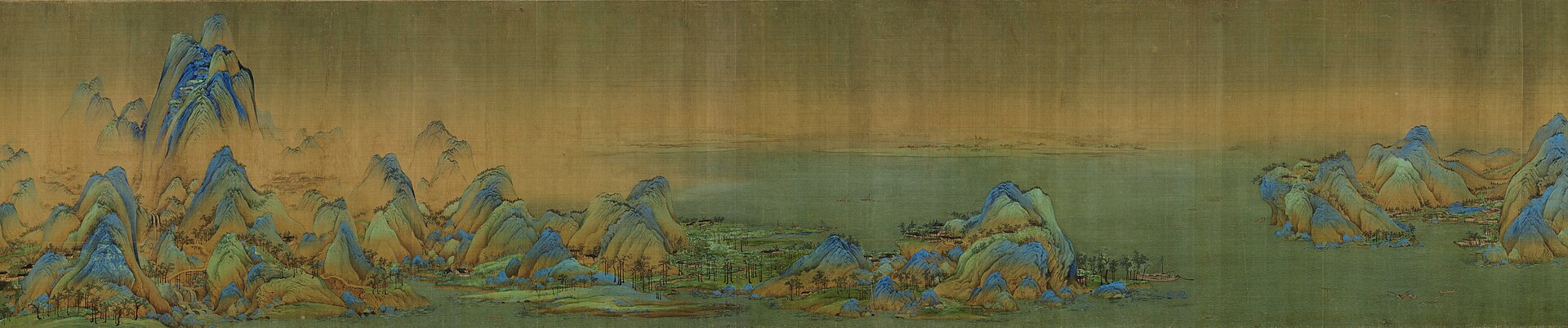
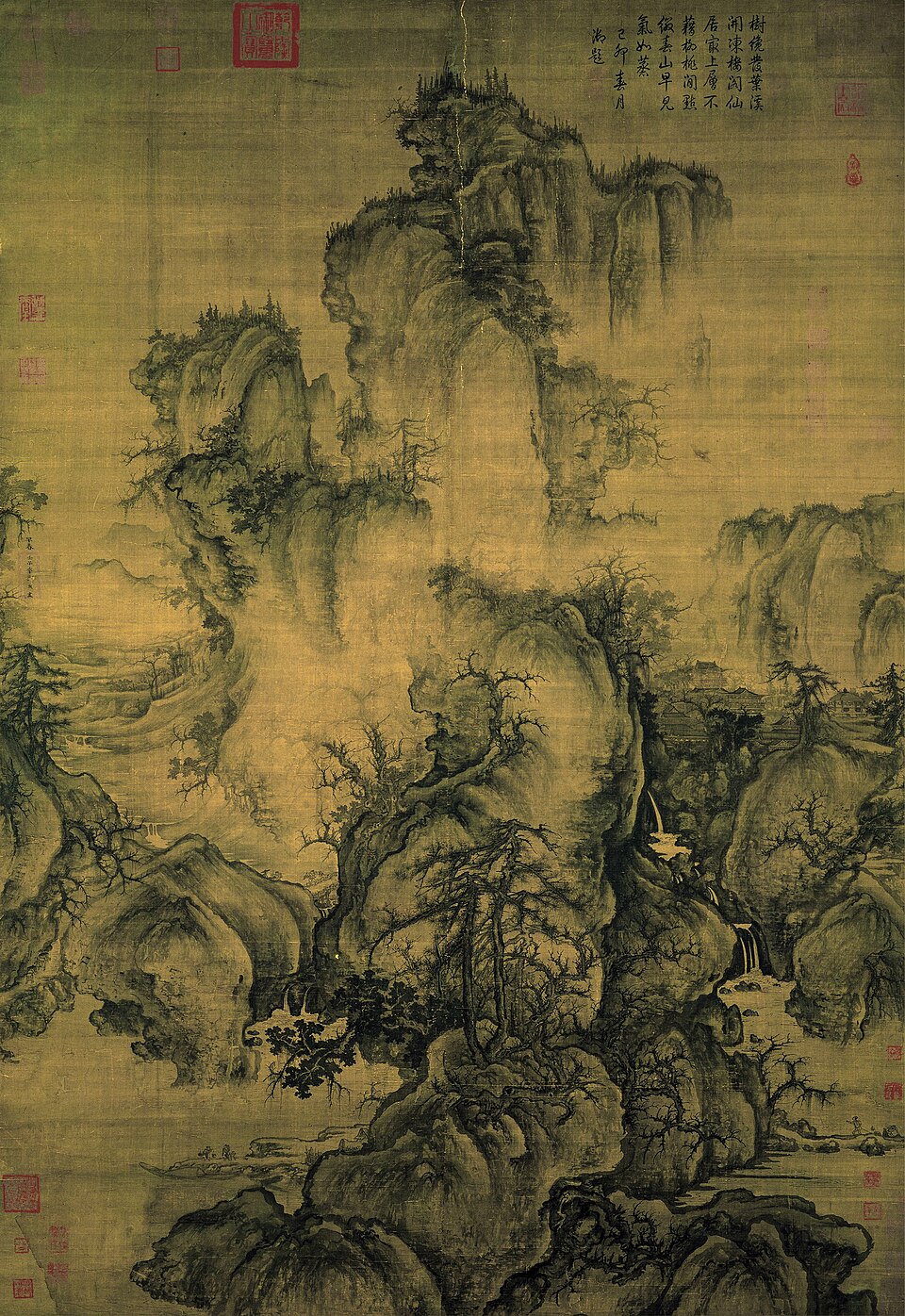
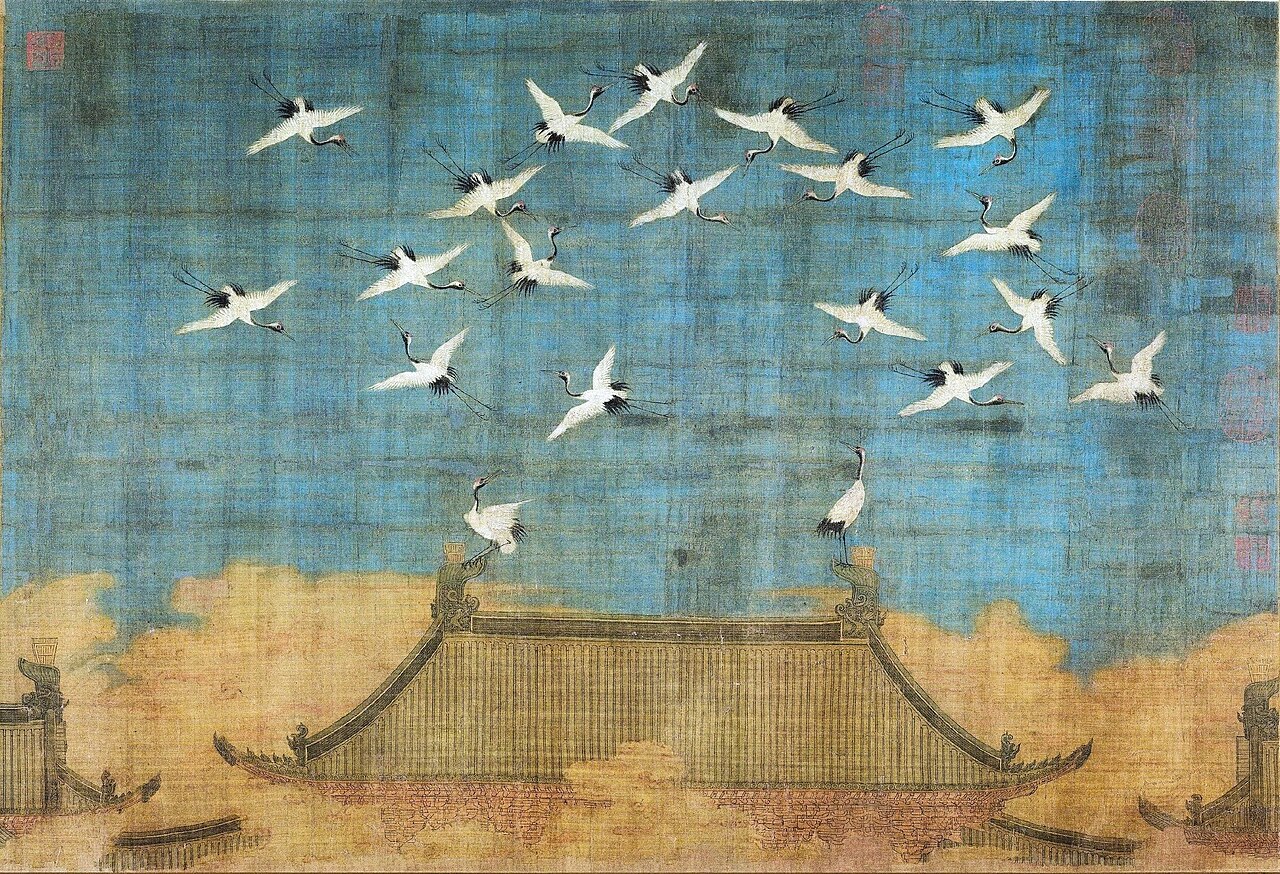
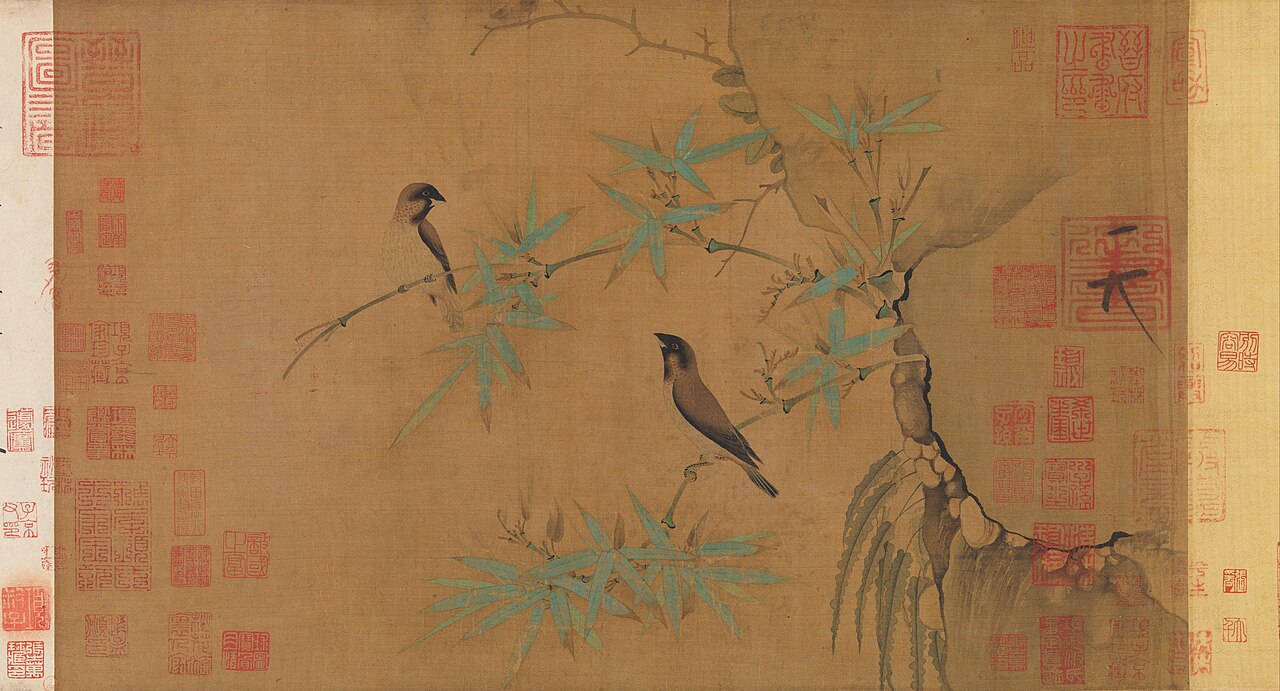
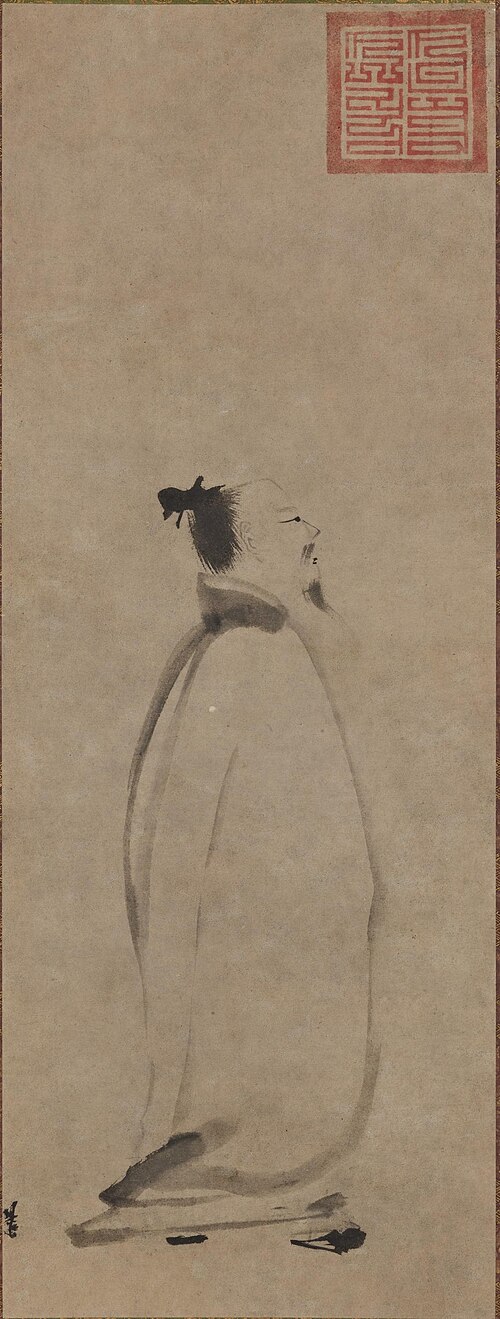
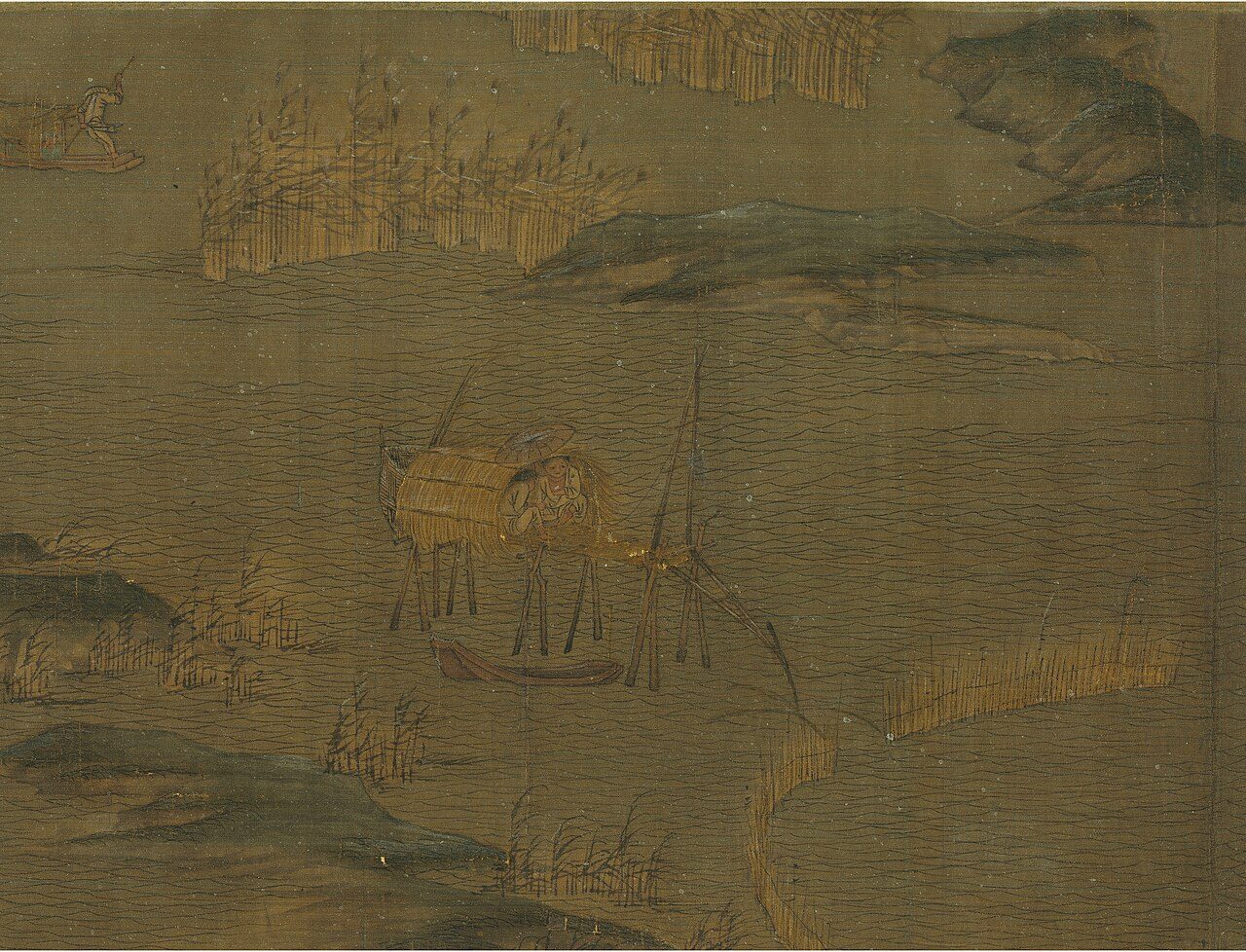
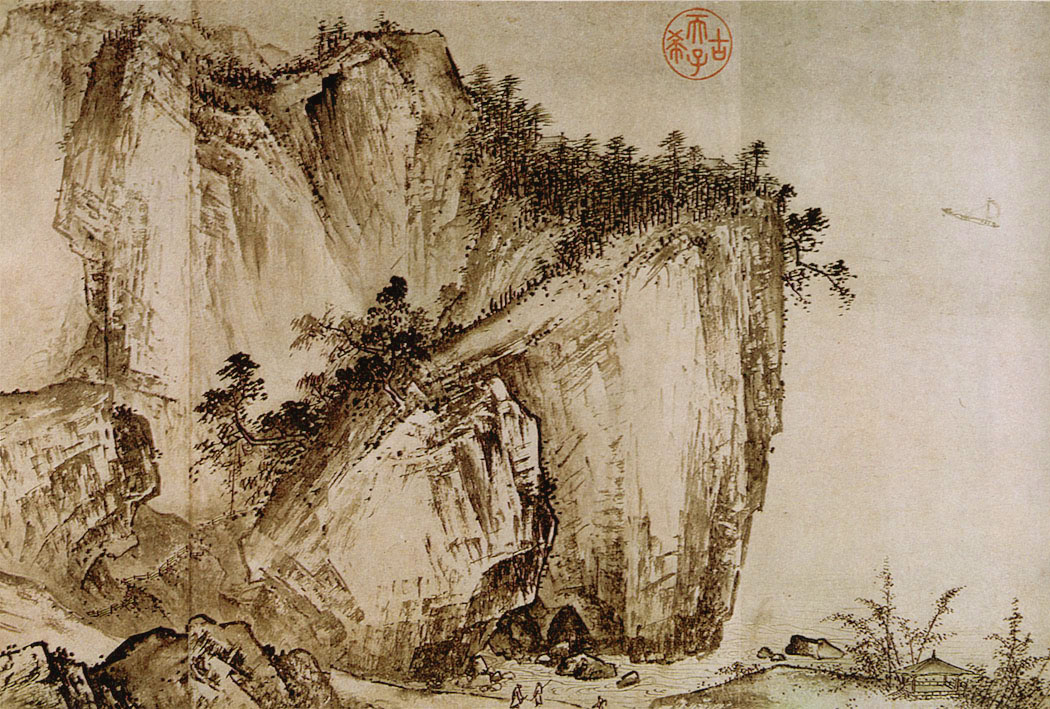
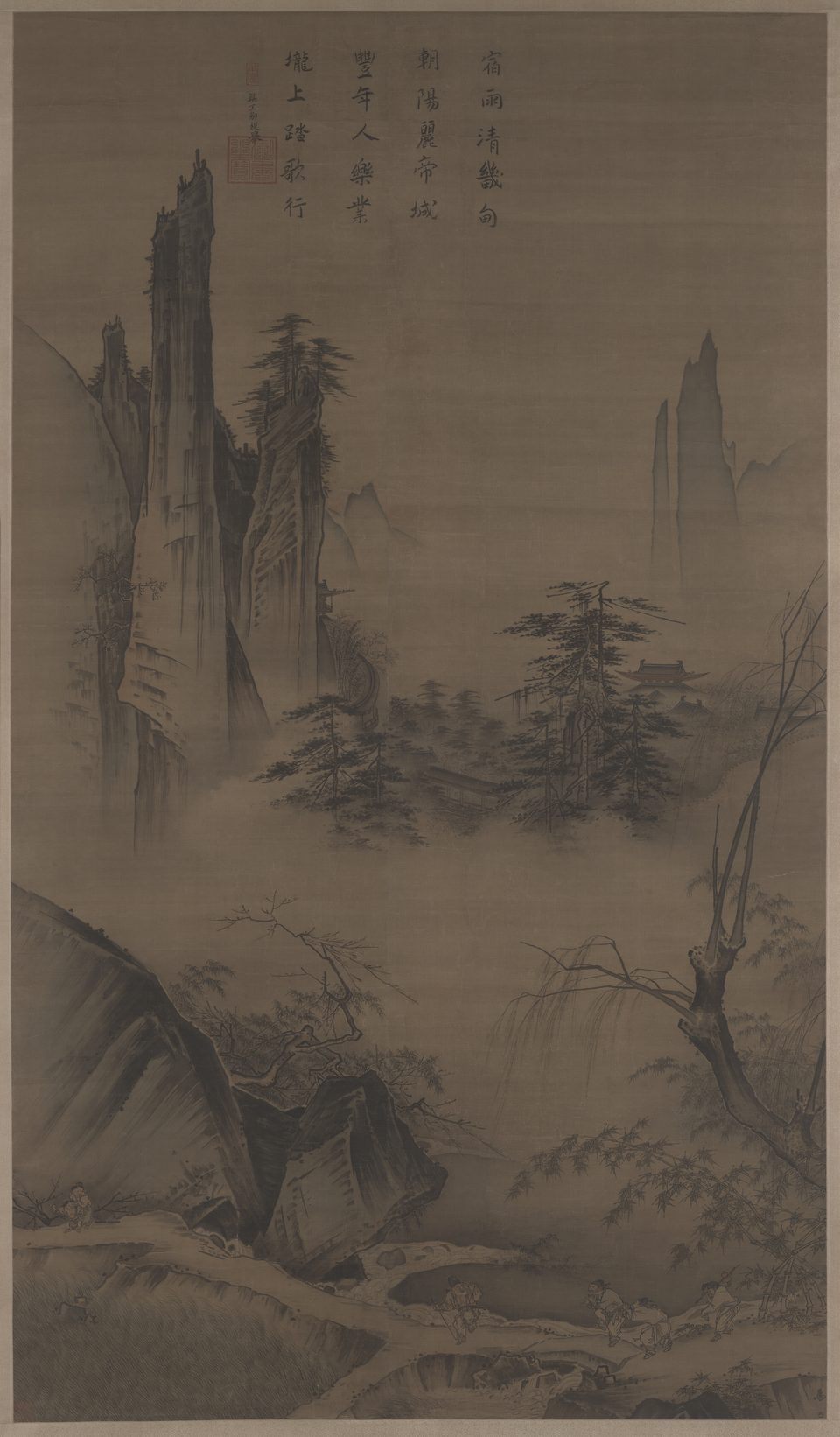
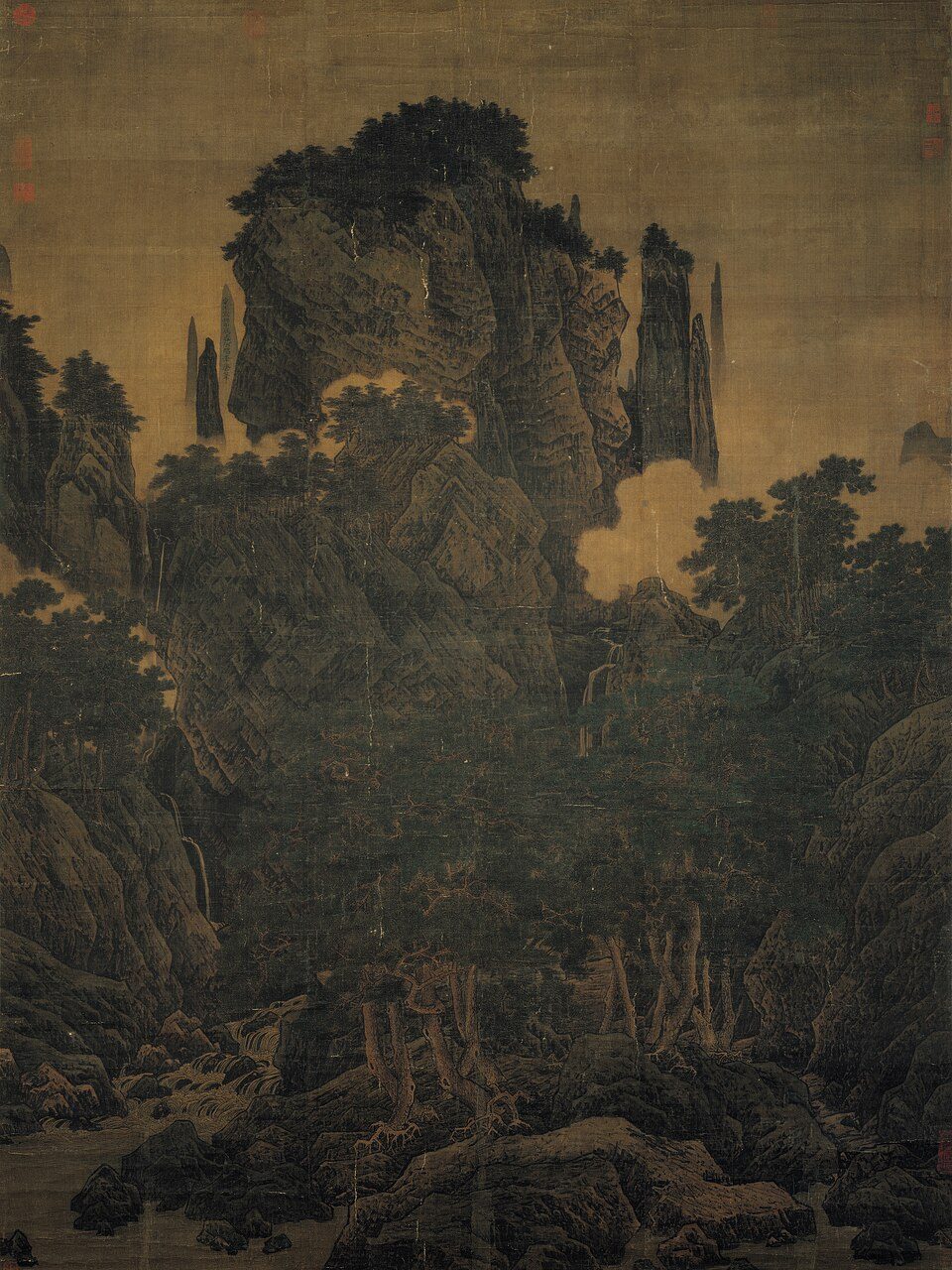
Handscroll · centre sectionA Thousand Li of Rivers and MountainsWang XimengA blue-and-green landscape handscroll painted by Wang Ximeng at the age of eighteen, and the high-water mark of the Northern Song tradition.Licence: Public domain · Wikimedia Commons sourceTravelers Among Mountains and StreamsFan KuanMonumental composition in which the mountain occupies almost the entire surface — the definitive Northern Song panoramic landscape.Licence: Public domain · Wikimedia Commons sourceEarly SpringGuo XiGuo Xi’s “crab-claw” branches and drifting mist evoke the turning of the season. His theory of landscape painting survives in the Linquan Gaozhi.Licence: Public domain · Wikimedia Commons sourceAuspicious CranesEmperor Huizong of SongTwenty red-crowned cranes wheeling above the Xuande Gate, painted by Emperor Huizong. A showpiece of the imperial academy style.Licence: Public domain · Wikimedia Commons sourceFinches and BambooEmperor Huizong of SongAttributed to Emperor Huizong (possibly executed by an academy painter). Extraordinary precision in the bamboo and the birds — the “investigation of things” in painting.Licence: CC0 · Wikimedia Commons sourceLi Bai StrollingLiang KaiLiang Kai’s “reduced brush” manner: a few strokes carry the whole posture and expression of the poet. A landmark of Southern Song Chan painting.Licence: Public domain · Wikimedia Commons sourceFirst Snow on the RiverZhao GanFishermen at work in the first snow, with figures and landscape given equal weight. An important work from the transition between the Southern Tang and the Song.Licence: Public domain · Wikimedia Commons sourceLandscapeXia GuiXia Gui, paired with Ma Yuan as “Ma–Xia,” favoured corner compositions and a wiry, forceful ink manner — the mainstream of Southern Song academy landscape.Licence: Public domain · Wikimedia Commons sourceLandscapeMa YuanMa Yuan pushed his subject into one corner and left the rest empty, earning the nickname “one-corner Ma.” His best-known work is Dancing and Singing.Licence: Public domain · Wikimedia Commons sourceWind in the Pines Among a Myriad ValleysLi TangLi Tang worked in both halves of the dynasty; his style combines northern grandeur with southern economy. This is his best-known surviving work.Licence: Public domain · Wikimedia Commons source
Calligraphy
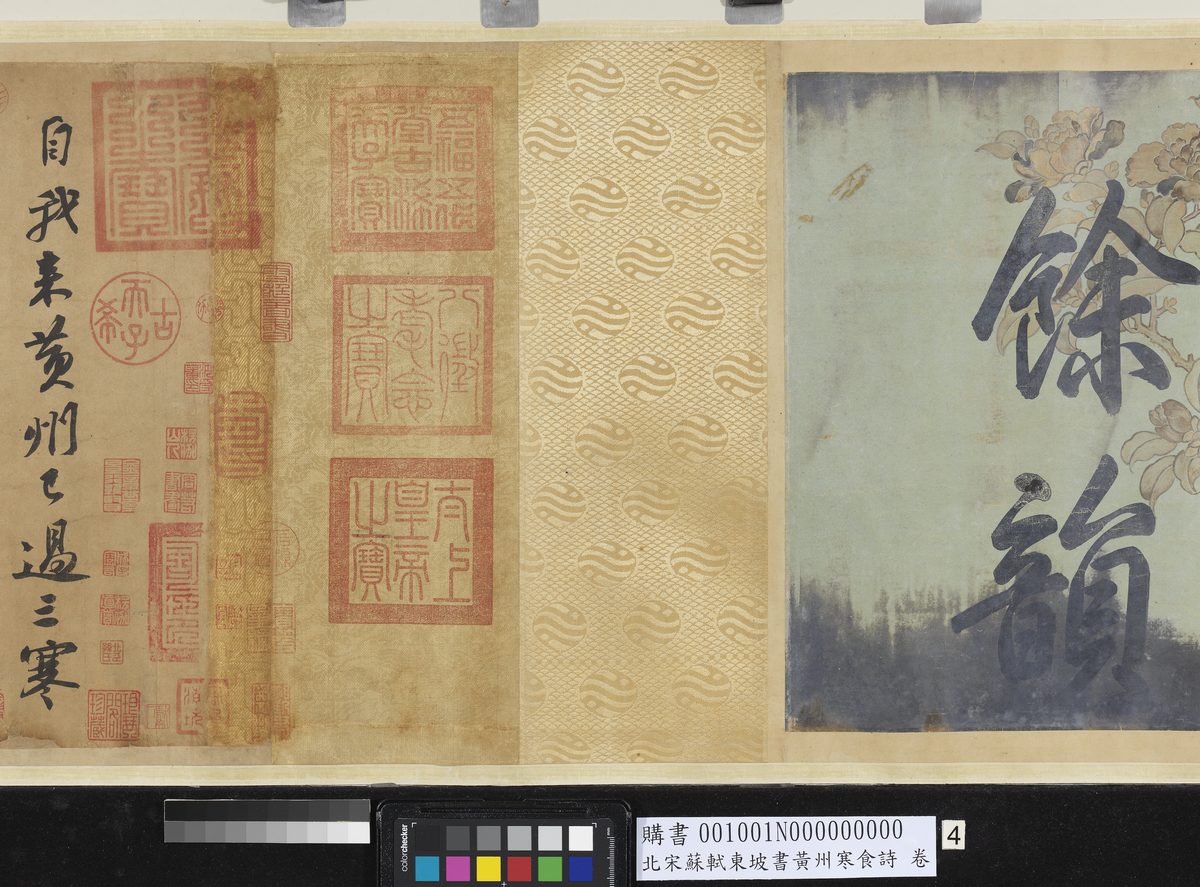
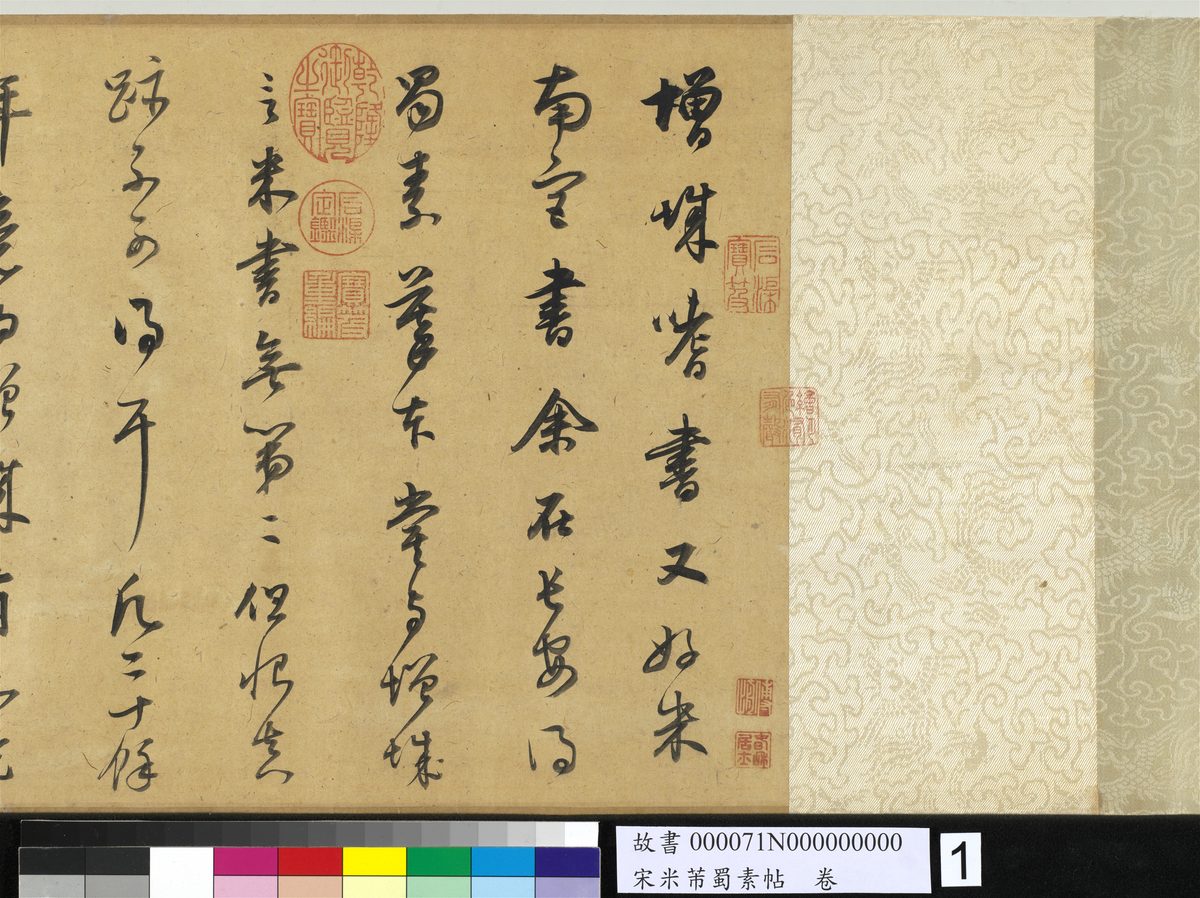
Calligraphy is where the Song hand is most directly visible — the brushstroke records the movement of the arm without revision. The three works below are among the most studied documents of the period.
Cold Food ObservanceSu ShiWritten in exile at Huangzhou. The brush starts calm and becomes increasingly agitated as the poem turns — traditionally ranked the third greatest running-script work in Chinese history.Licence: CC0 · Wikimedia Commons sourceShu Su Tie (Poems on Sichuan Silk)Mi FuMi Fu writing on a piece of fine Sichuan silk. Every edge of the brush is used, and the manner is famously quick and sharp.Licence: CC0 · Wikimedia Commons sourceHandscroll · centre sectionCalligraphyHuang TingjianHuang Tingjian built characters with a tight centre and strokes radiating outward. With Su Shi he gives the pair-name “Su–Huang” among the four masters of Song calligraphy.Licence: Public domain · Wikimedia Commons source
Ceramics and Objects
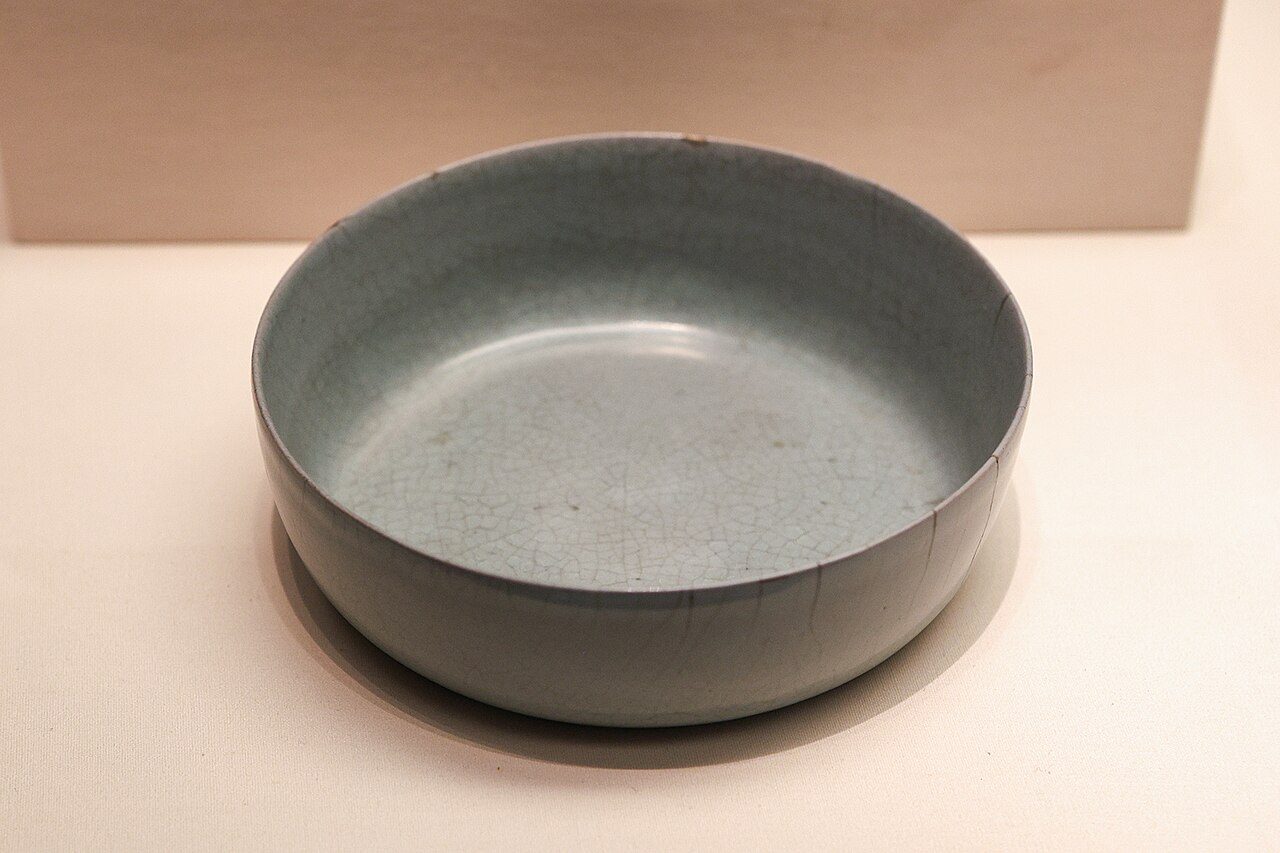
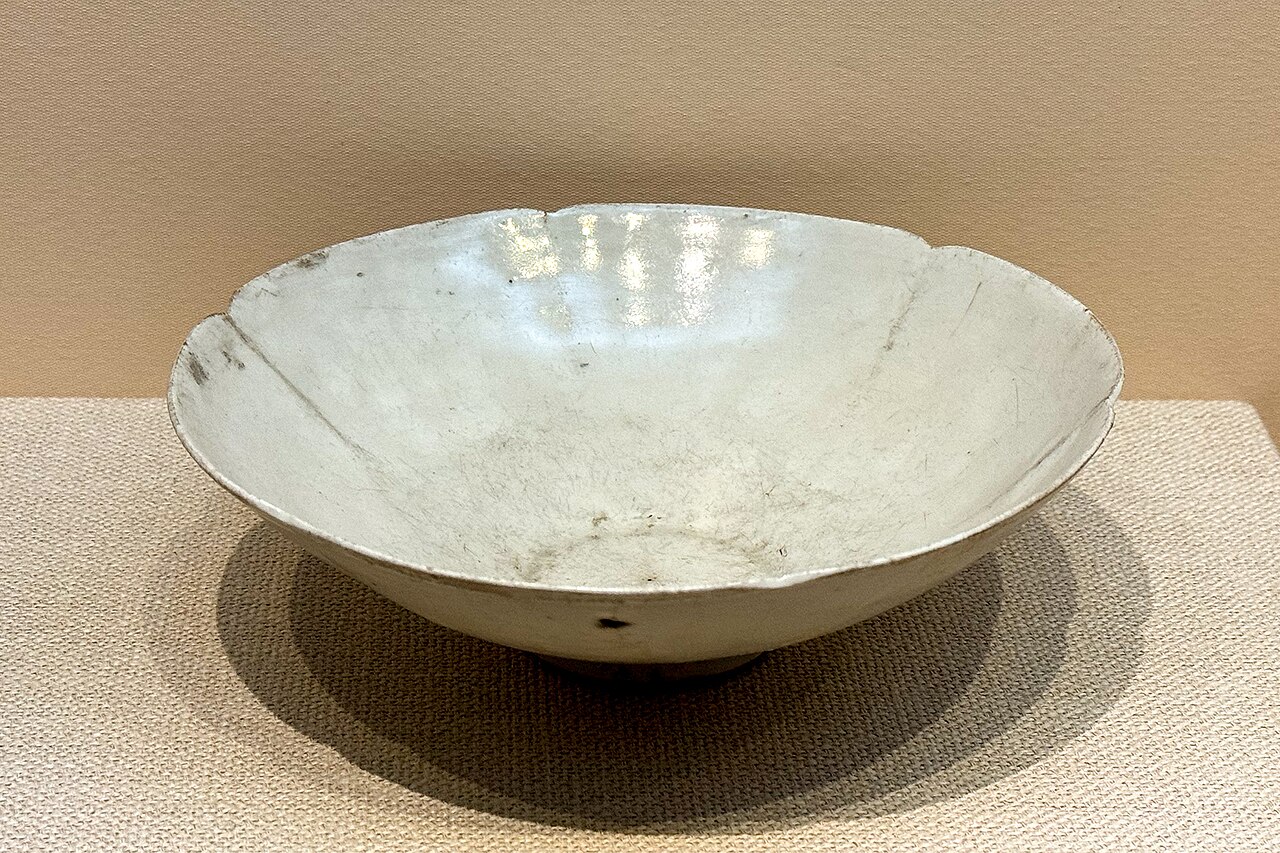
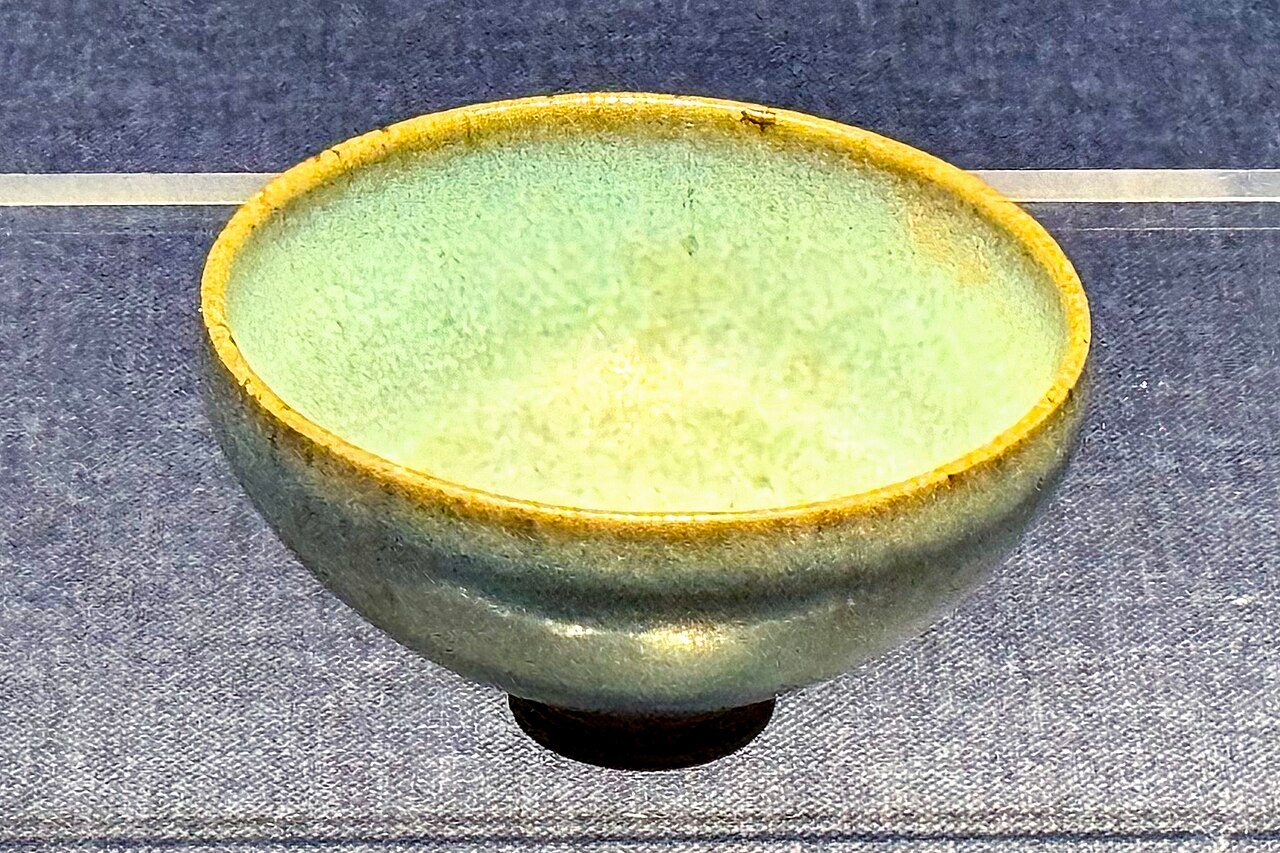
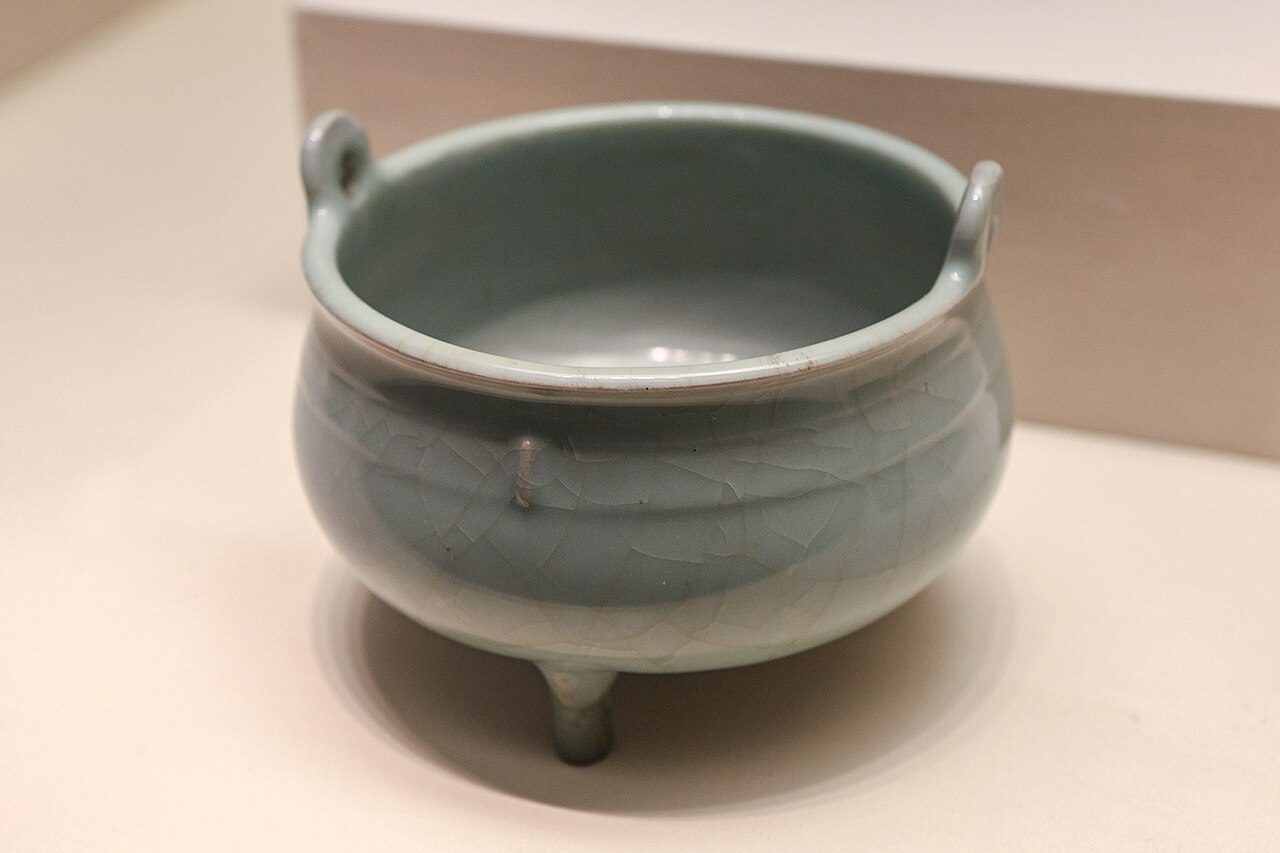
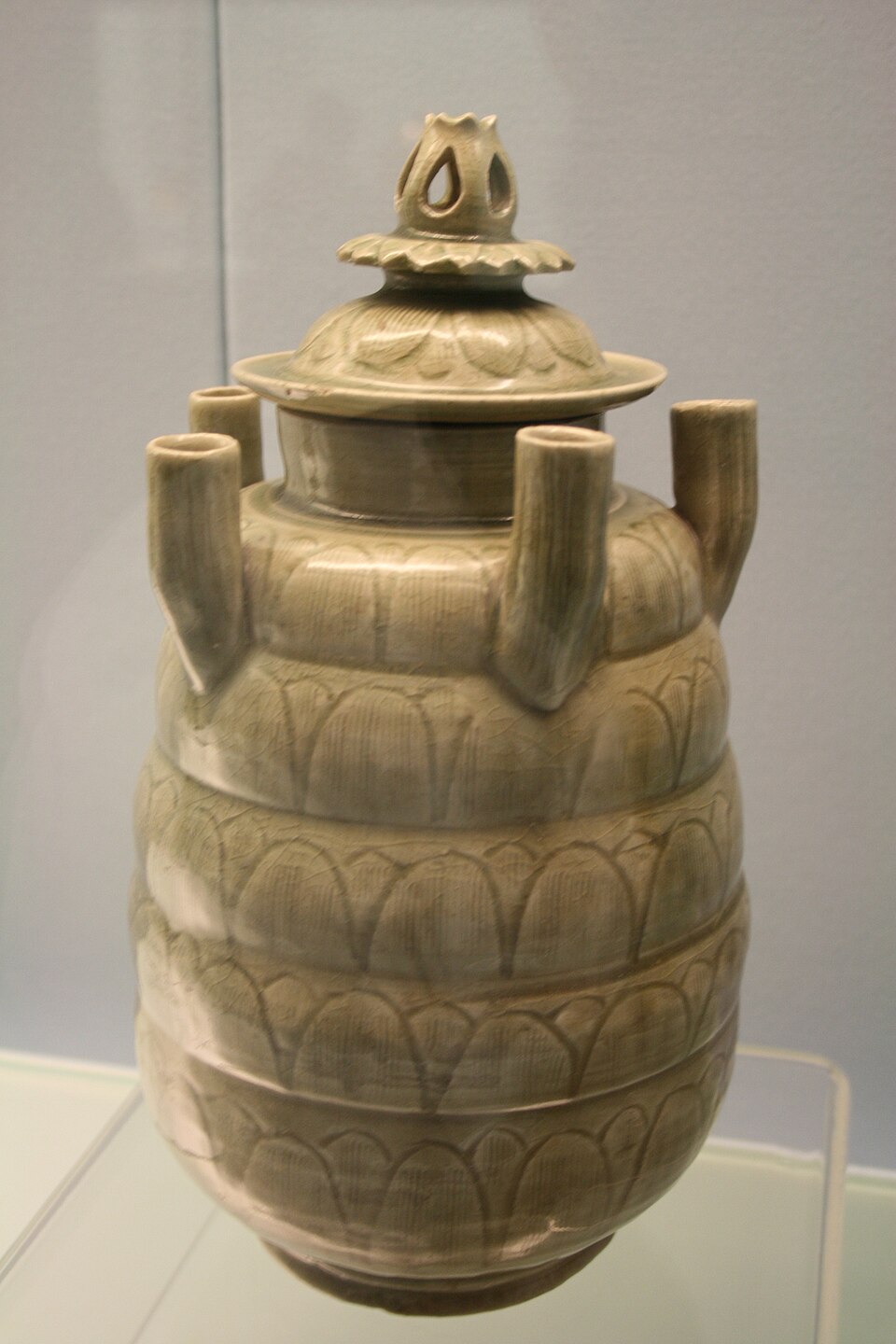
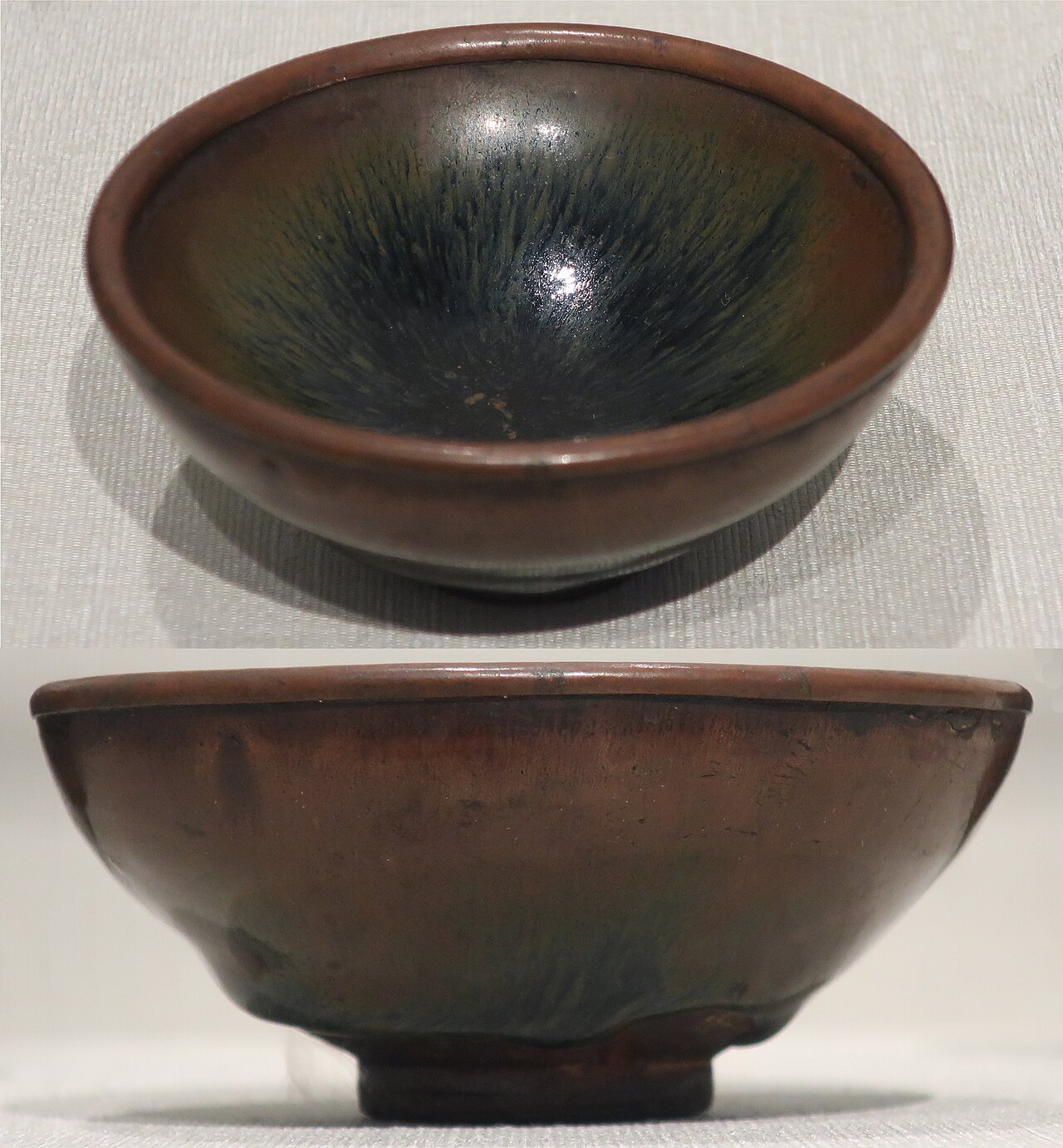
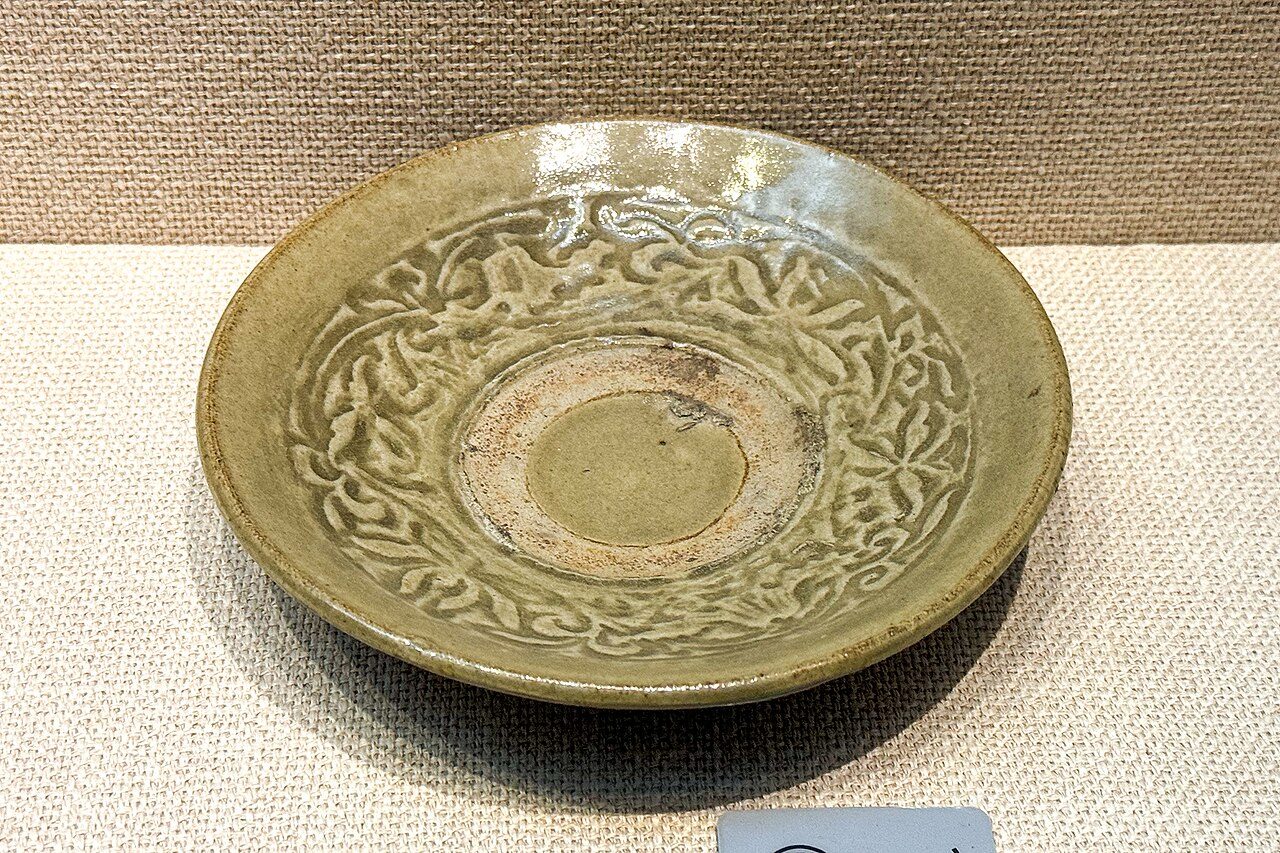
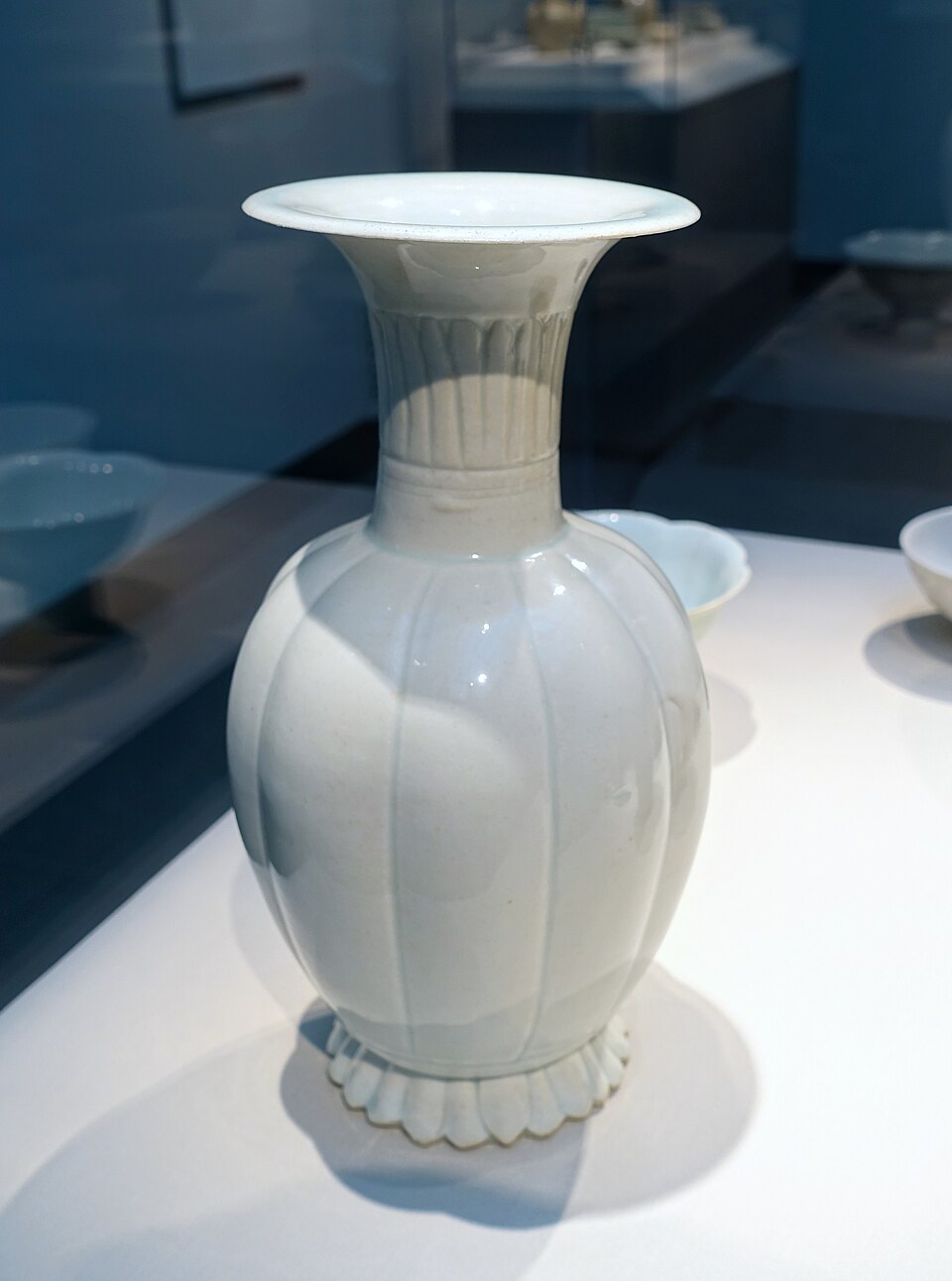
Song ceramics are usually described in terms of restraint: single-colour glazes, forms reduced to essentials, and a strong preference for the qualities of the material over applied decoration. The pieces below include the great court wares and the export wares that travelled in the ships described in Volume IV.
Ru warePhotograph:WindmemoriesKnown for a sky-blue glaze with fine crackle, fired on small supports. Surviving pieces are extremely few; it is the rarest of the Song court wares.Licence: CC BY-SA 4.0 · Wikimedia Commons sourceDing warePhotograph:WindmemoriesCreamy white porcelain, with black and brown glazes also produced. Ding potters pioneered upside-down firing, which left the rims unglazed and usually bound in metal.Licence: CC BY-SA 4.0 · Wikimedia Commons sourceJun warePhotograph:WindmemoriesColoured with copper, giving rose-purple and crabapple-red variations — “one colour in the kiln, ten thousand on the way out.”Licence: CC BY-SA 4.0 · Wikimedia Commons sourceGuan warePhotograph:WindmemoriesMade for the Southern Song court. Thick glaze, pronounced crackle, and the characteristic dark body showing as “purple mouth and iron foot.”Licence: CC BY-SA 4.0 · Wikimedia Commons sourceLongquan celadonPhotograph:Gary Lee Todd, Ph.D.Thick, lustrous jade-green glaze, reaching a near-powder-blue tone in the Southern Song. The single most widely exported Chinese ceramic of the period.Licence: CC0 · Wikimedia Commons sourceJian tea bowlPhotograph:HiartDeveloped for whisked tea, where a pale foam showed best against a black glaze. The hare’s-fur, oil-spot and “yohen” effects are ancestral to the Japanese tenmoku tradition.Licence: CC0 · Wikimedia Commons sourceYaozhou warePhotograph:WindmemoriesCeladon with incised and carved decoration, cut with a sharp blade and considerable force — often called the finest of the northern celadons.Licence: CC BY-SA 4.0 · Wikimedia Commons sourceQingbai warePhotograph:DaderotJingdezhen production with a thin body and a glaze between green and white. The technical foundation on which later blue-and-white porcelain was built.Licence: Public domain · Wikimedia Commons source
Rights and Credits
Every image on this site is from a public collection and is either in the public domain or released under CC0. Each item carries its licence and a link to the source file. Where a work exists in several versions, the one used is the highest-quality freely licensed scan available at the time of writing.
If you are the rights holder
We have taken care to use only material that is free of known copyright restrictions, but mistakes happen. If you hold rights in anything reproduced here, write to us and we will remove or correct it promptly.
Further reading
Roderick Whitfield, “Along the River During the Qingming Festival” — the standard monographic study in English.
Valerie Hansen, The Beijing Qingming Scroll and Its Significance for the Study of Chinese History.
The Palace Museum, Beijing — holding institution of the Qingming scroll, for high-resolution official images.
 Handscroll · centre section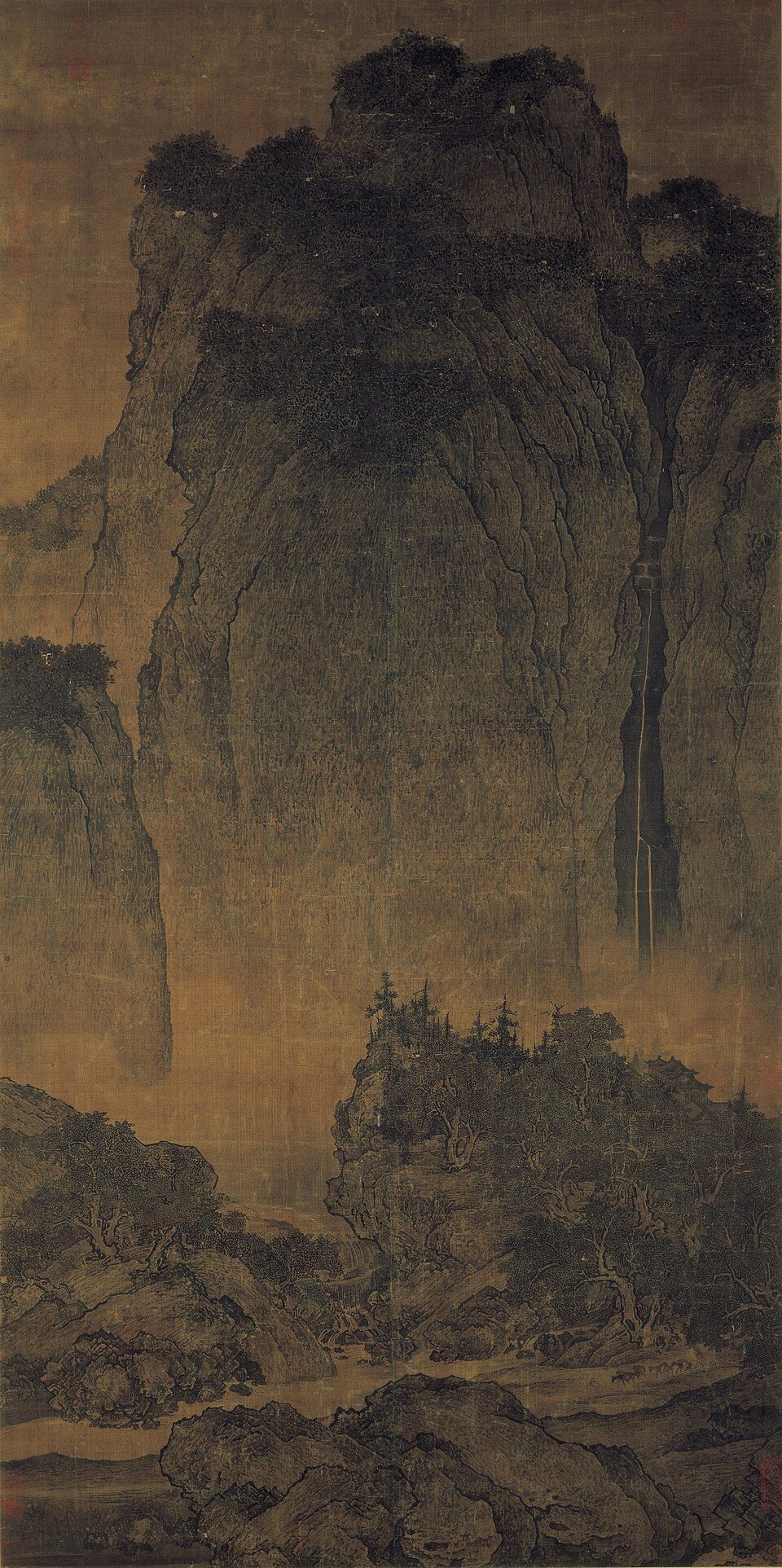
 Handscroll · centre section