The Song is the period when Chinese visual and literary taste became self-conscious — when writers started telling each other what was vulgar. What they settled on was a set of preferences that still read as modern: restraint over display, suggestion over statement, the irregular and hand-made over the symmetrical and imposed.
Painting: From the Mountain to the Corner
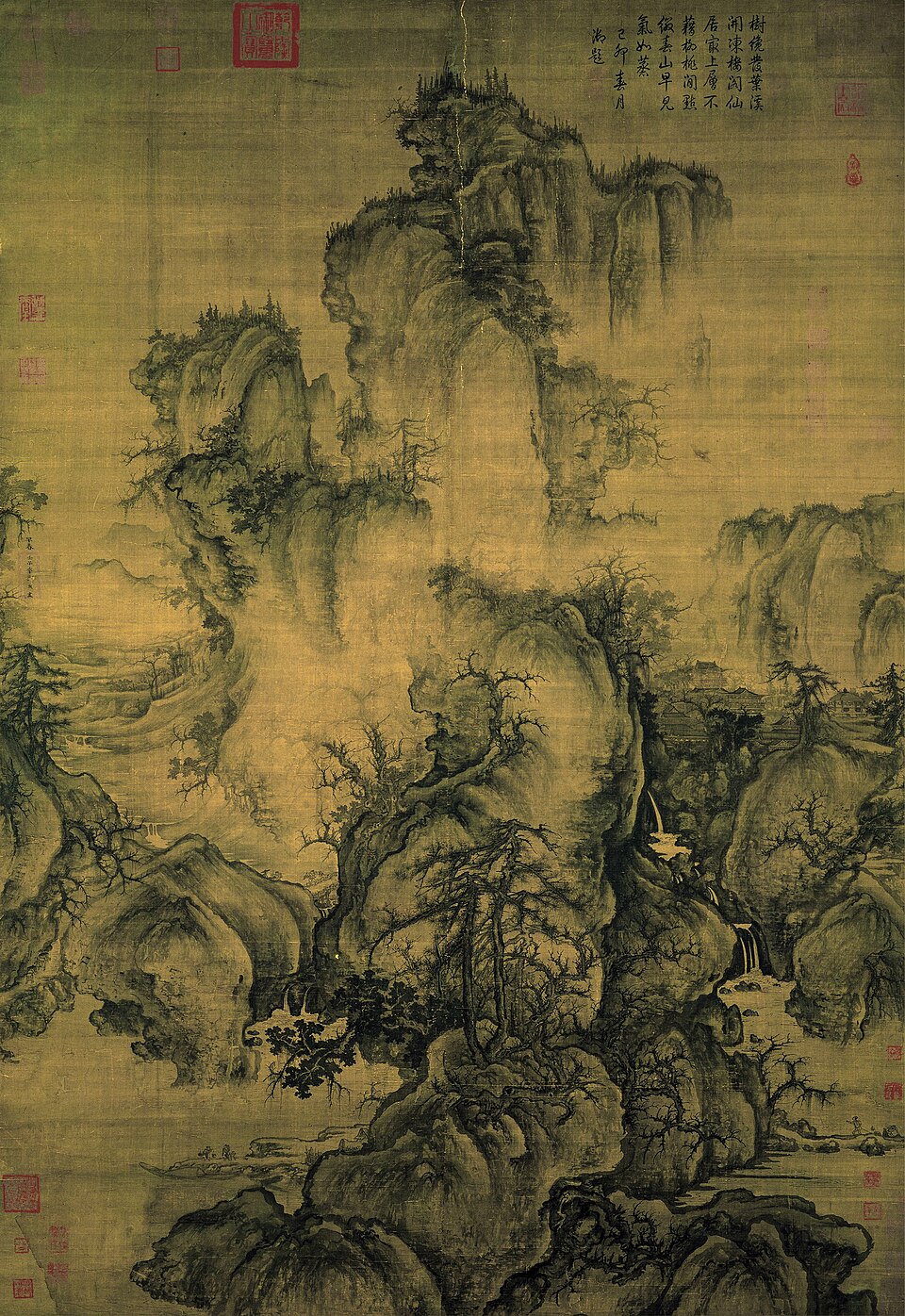
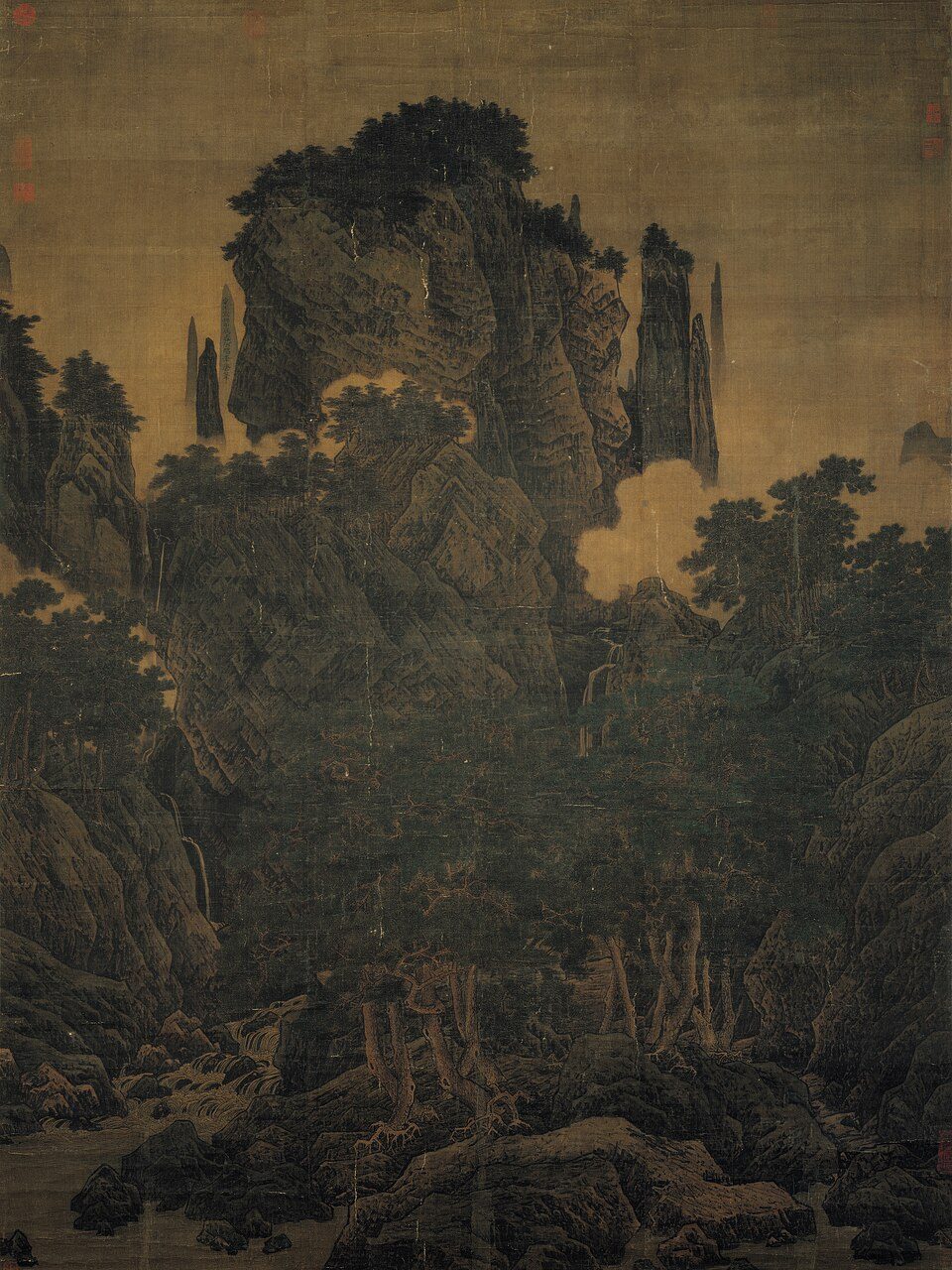
Northern Song landscape painting is monumental. In Fan Kuan’s Travelers Among Mountains and Streams the mountain occupies almost the whole surface and the human figures are nearly invisible at the bottom — a proportion that says something about the place of people in the world. Guo Xi’s Early Spring adds atmosphere, mist and the famous “crab-claw” branches, and his treatise on landscape (the Linqu Gaozhi) sets out a theory of multiple viewpoints that predates European landscape theory by centuries.
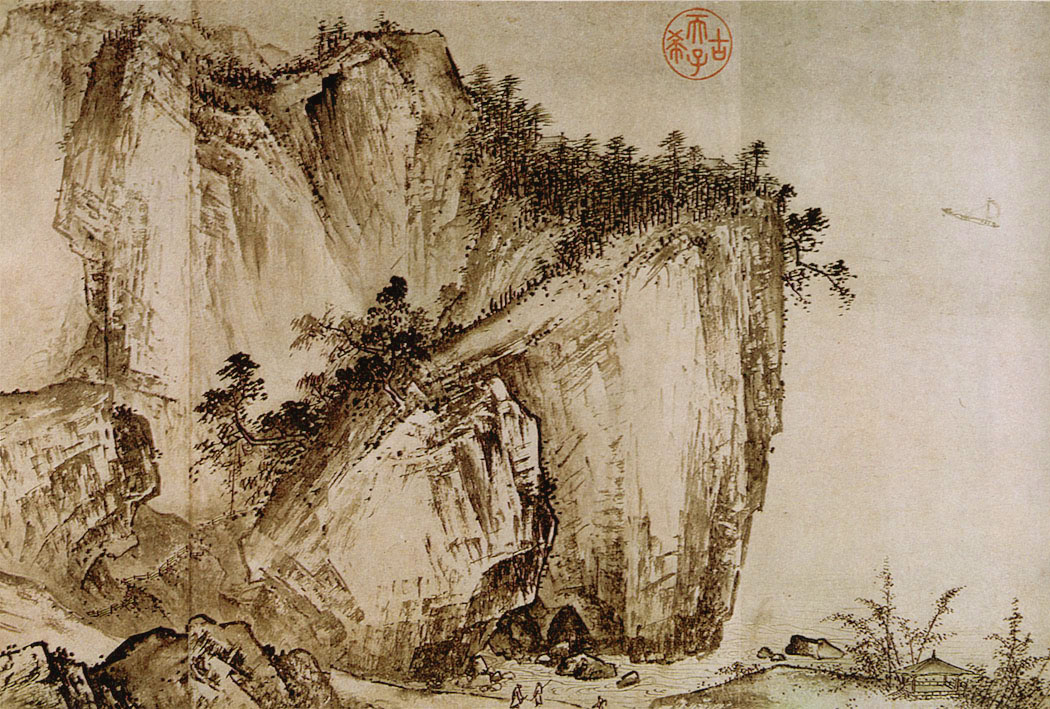
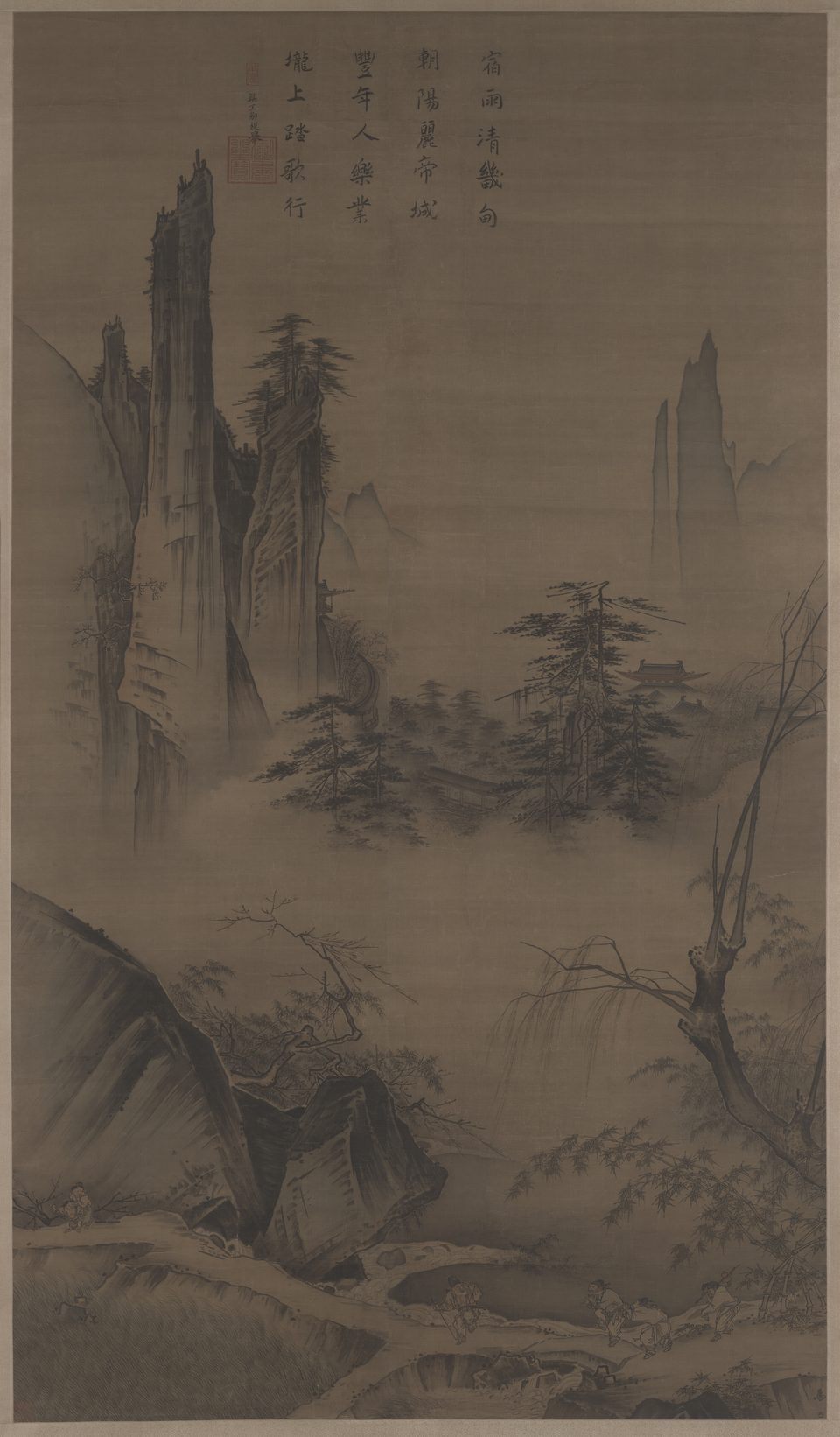
After the dynasty moved south, the paintings got smaller and quieter. Ma Yuan and Xia Gui pushed the subject into one corner of the silk and left the rest empty — Ma Yuan is nicknamed “one-corner Ma.” Figures became dots; space became the subject. This Southern Song mode is probably the single most influential landscape style in East Asian art.
Two traditions, not one line
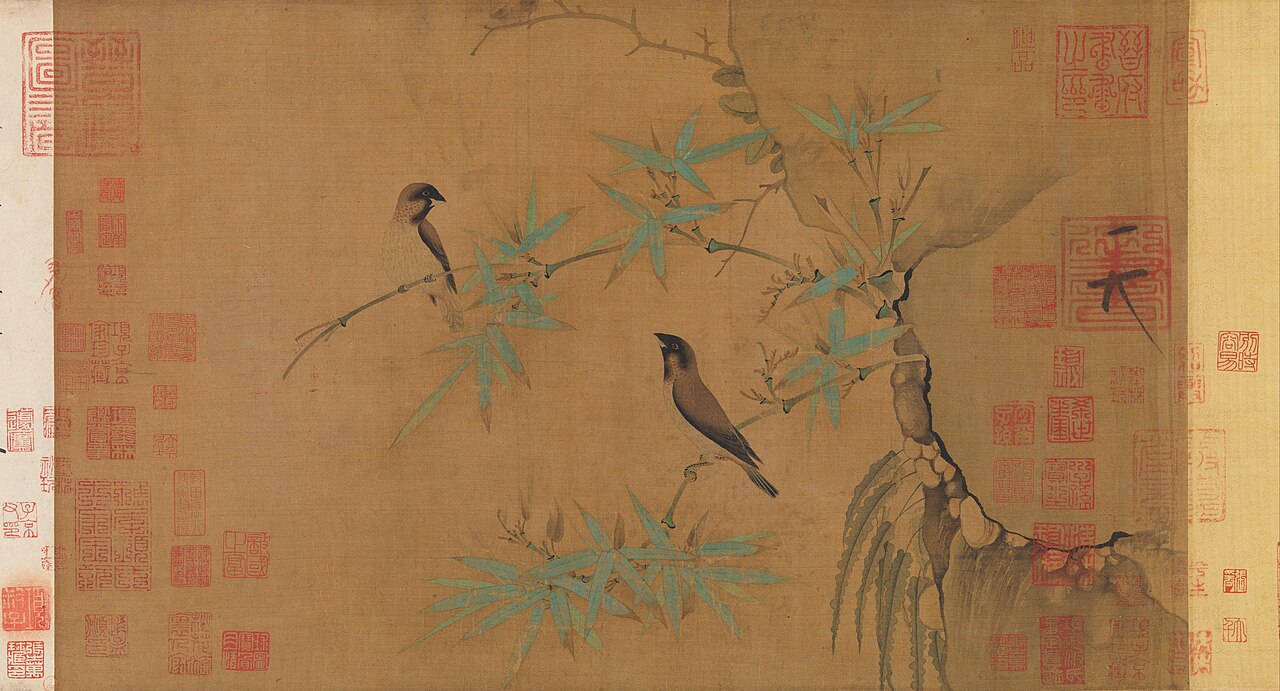
Court and literati painting are usually described as rivals, but they were not sequential. Academy painters and scholar-amateurs worked at the same time, often for the same patrons, and the “literati” label was sometimes a claim about the painter’s social status as much as about technique.
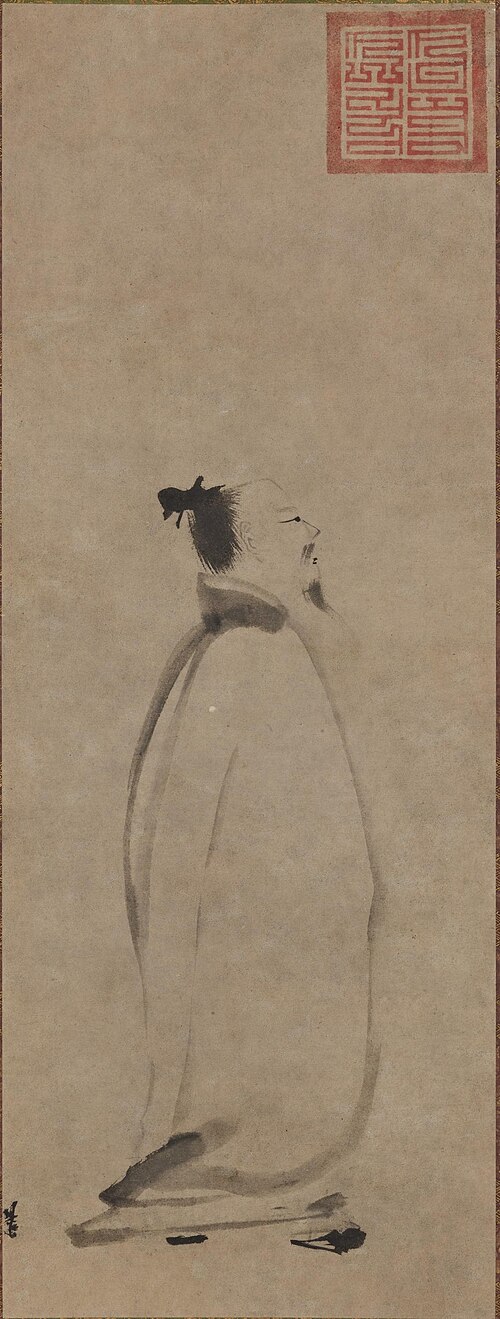
Alongside the court academy ran the literati tradition. Su Shi argued that painting should express the mind of the painter rather than accurately copy appearances, and that a scholar who painted bamboo badly was worth more than a professional who painted it well. It is a strong claim about the purpose of art, and it set the terms of the argument for the next eight centuries.
Paintings in Public Collections
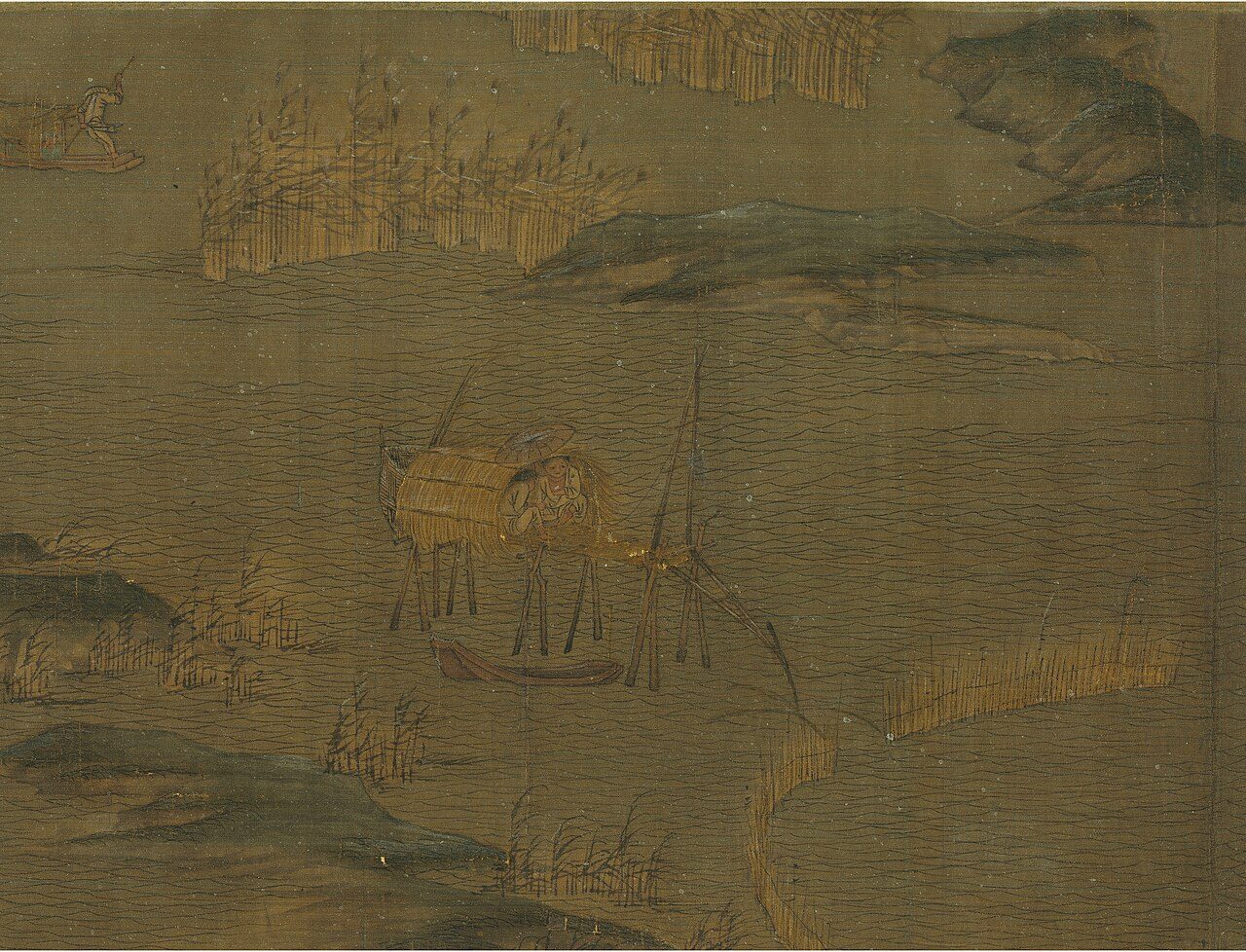
The works below are held in public collections and are in the public domain. Each is credited to its holding institution; click through for the Wikimedia Commons record.
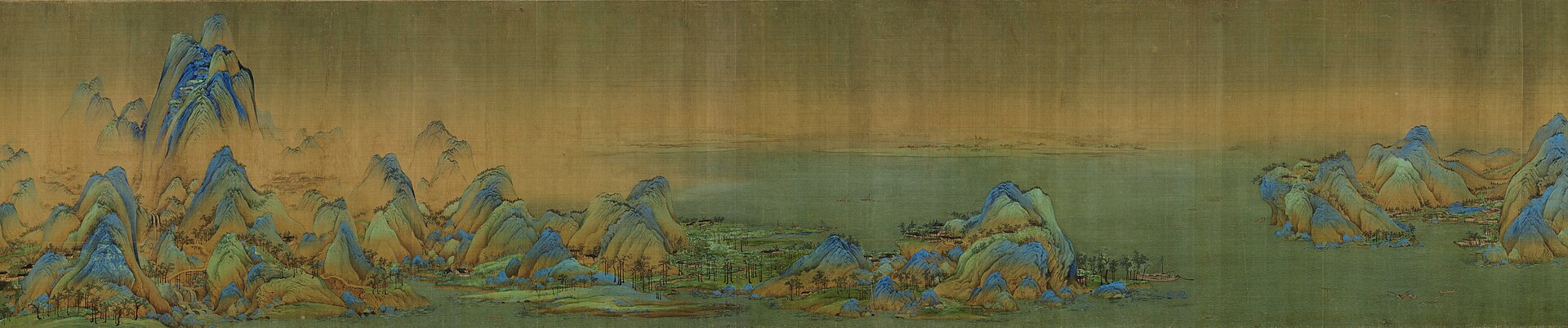 Handscroll · centre section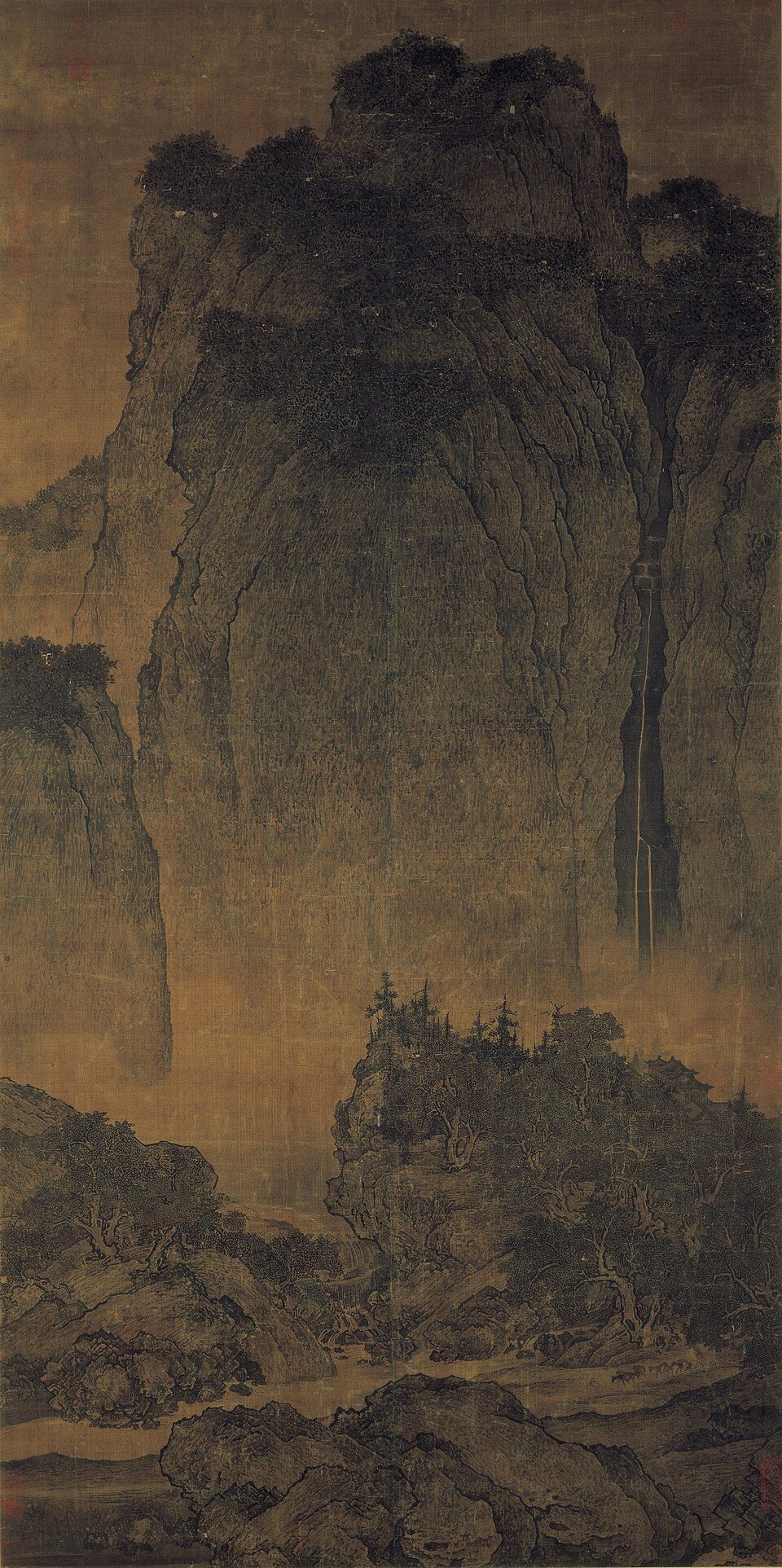
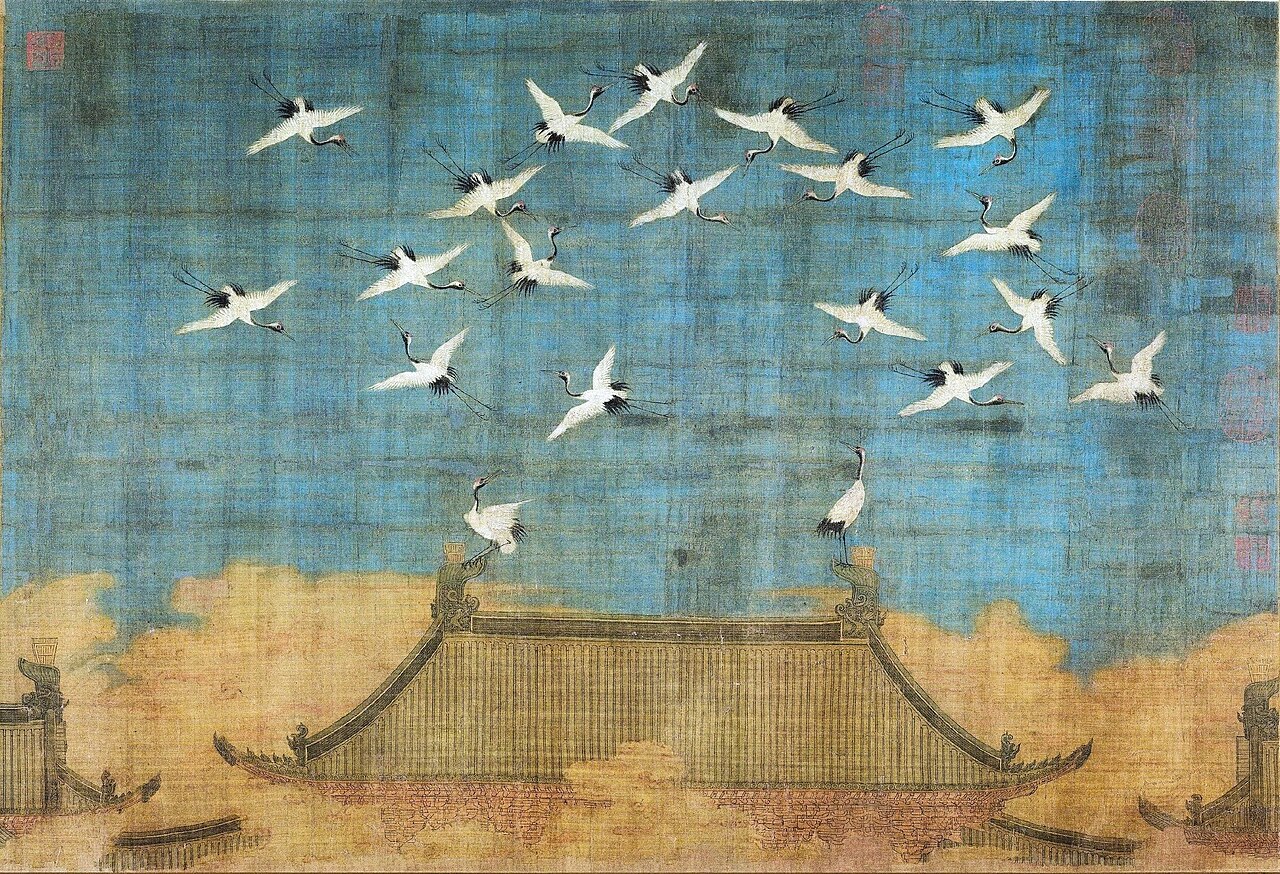
Ceramics: The Argument for Less
Song ceramics are the clearest expression of the dynasty’s taste. There is very little decoration on them. What there is instead: a glaze of a single colour, a form reduced to essentials, and a great deal of attention to the quality of the porcelain body and the behaviour of the glaze in the kiln.
The fifth ware, Jian tea bowls from Fujian, belong to a different story. They are dark, heavy, and lustrous — designed for whisked powdered tea, where a pale foam showed best against a black bowl. Their aesthetic is the opposite of celadon, and they are the ancestors of the Japanese tenmoku tradition, which travelled to Japan with Zen Buddhism.
Ci: Poetry Written to Music
Ci (词) is lyric poetry written to a pre-existing tune. Each tune has a fixed pattern of line lengths and rhymes, and the poet’s skill lies in filling that pattern so naturally it does not show. The form originated in the entertainment quarters, which is why early ci are largely about love and loss and why serious critics initially looked down on them.
In the Song, ci became the dominant lyric form. Su Shi widened its range to include history, philosophy and daily life. Li Qingzhao — the greatest woman writer in Chinese history by most accounts, and also an important critic — wrote with a precision about loss that has never gone out of print. Xin Qiji and Lu You, both Southern Song, brought a bitterness about the lost north into the form and made it political.
Last night the wind and rain were violent —
deep sleep would not clear the lingering wine.
I asked the one rolling up the curtain,
but she said the crab-apple blossoms are as they were.
Do you know? Do you know?
They should be green, fat, red, thin.— Li Qingzhao (李清照), “Ru Meng Ling” — one of the most quoted ci in the language
A note on translation
Classical Chinese poetry is extremely compressed — the original of the passage above is 33 characters, and its last line is four. Any English version is an interpretation. Where a poem appears on this site we quote a translation and name it, rather than presenting a paraphrase as the poem.
Calligraphy: The Four Masters
Calligraphy was considered the highest of the visual arts, because it recorded the movement of the hand directly and could not be revised without the revision showing. The Song canon settled on four masters, conventionally listed as Su Shi, Huang Tingjian, Mi Fu and Cai Xiang.
Their reputations rest on different things. Su Shi’s Cold Food Observance starts controlled and becomes increasingly agitated as the poem turns to exile — a rare case where you can watch a mood change inside a single document. Mi Fu was famous for speed and for turning the brush’s edge in every direction. Huang Tingjian built characters with a tight centre and long radiating strokes that made each one look like it was reaching outward.
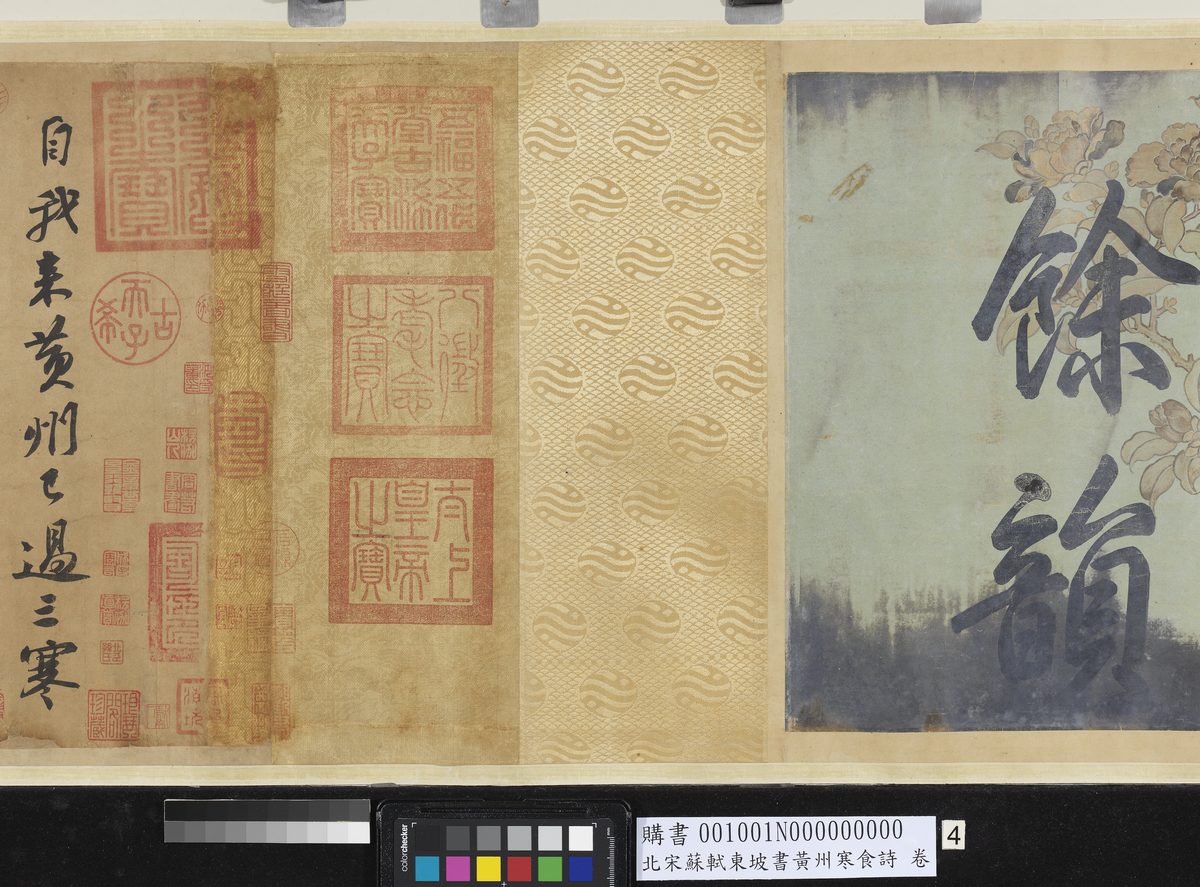
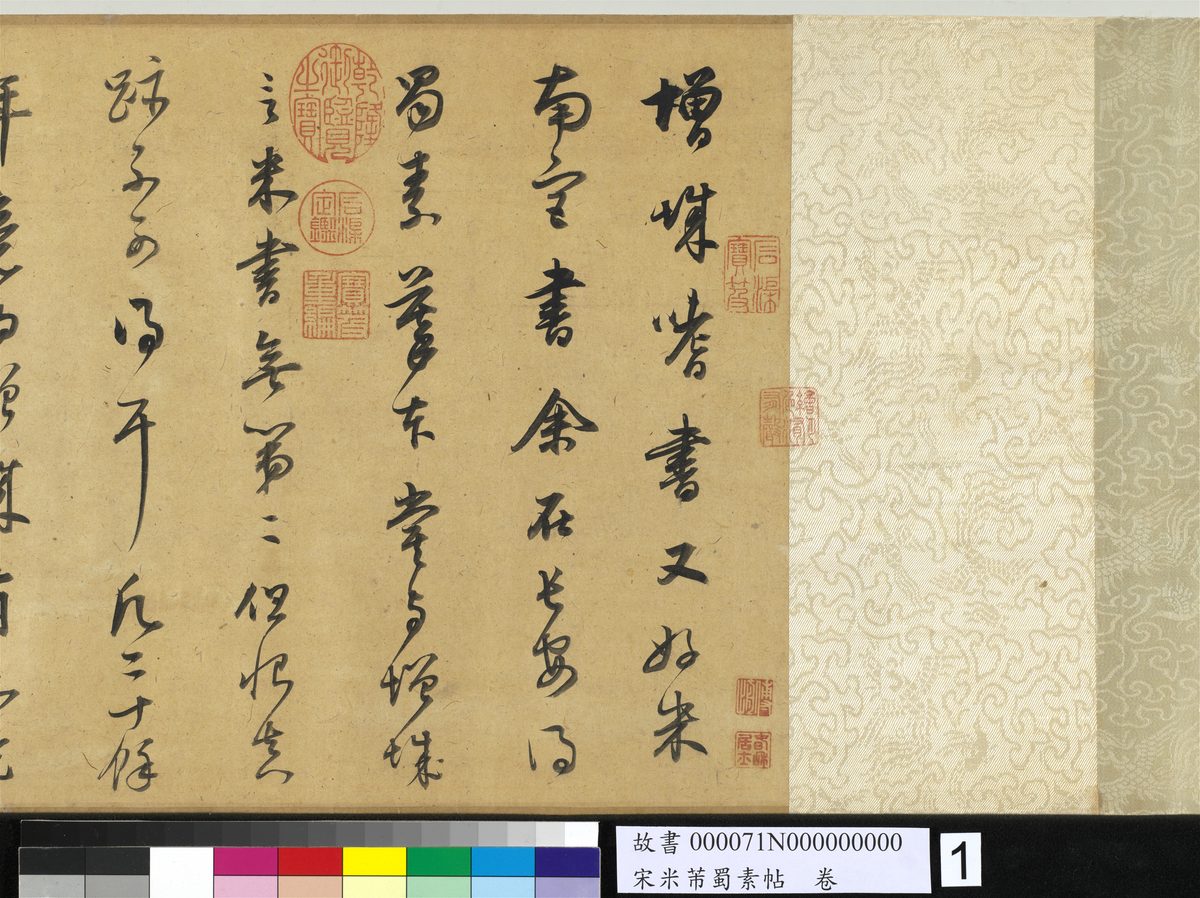
 Handscroll · centre section
Music, Buildings, and the Literati Life
The qin. The seven-string zither was the instrument of the scholar rather than the performer — quiet, played alone or for one listener, and understood as a discipline rather than an entertainment. Its notation survives in large quantities, and its repertoire is still played.
Building. Song architecture is timber-frame, with a load-bearing structure of columns and beams and roofs carried on bracket sets. In 1103 the state promulgated the Yingzao Fashi, a technical building standard compiled by the official Li Jie. It is the oldest surviving systematic Chinese architectural treatise and our main evidence for how these buildings were actually made.
The literati life. The ideal of the educated gentleman included painting, calligraphy, poetry and qin — sometimes extended to chess, tea and incense. What matters about this list is not that people practised it, but that it defined a social type: someone whose claim to standing rested on cultivation rather than on office, wealth or birth. That type outlived the Song by a thousand years.
Attribution
Many famous Song paintings exist in later copies, and the boundary between “by” and “attributed to” is often genuinely unclear. Labels on this site follow the holding institution’s attribution and note it where the museum itself flags uncertainty.
Further reading
- James Cahill, Chinese Painting — a short, opinionated, excellent survey.
- Ronald Egan, The Problem of Beauty: Aesthetic Thought and Pursuits in Northern Song Dynasty China.
- Stephen Owen, An Anthology of Chinese Literature: Beginnings to 1911 — the standard English anthology of the poetry, including ci translations.